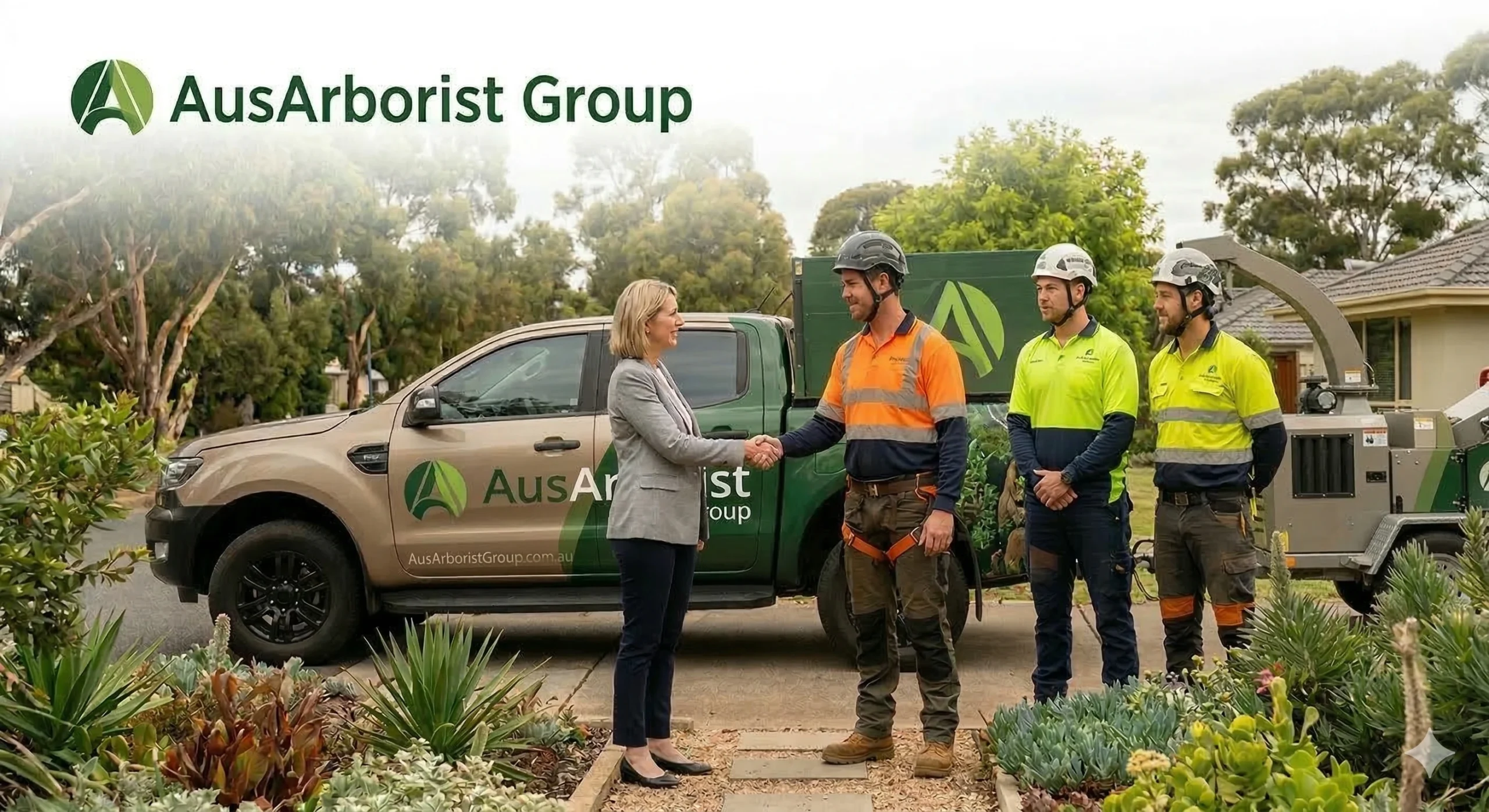
Property owners throughout Hunters Hill 2110 face unique challenges when managing mature trees on sloping terrain near heritage-protected zones. Professional tree services become essential when overhanging branches threaten powerlines, root systems compromise building foundations, or storm-damaged trees pose immediate safety risks to families and neighbours.
AusArborist Group delivers comprehensive tree care solutions backed by AQF Level 3 arborist qualifications and full public liability insurance coverage. The team specialises in complex residential tree removal, precision pruning techniques, stump grinding operations, and emergency response services across the Hunters Hill municipality.
Professional Tree Removal Services and Tree Lopping Solutions
Understanding the distinction between complete tree removal and selective tree lopping helps property owners make informed decisions about their landscape management requirements.
Complete Tree Removal Services
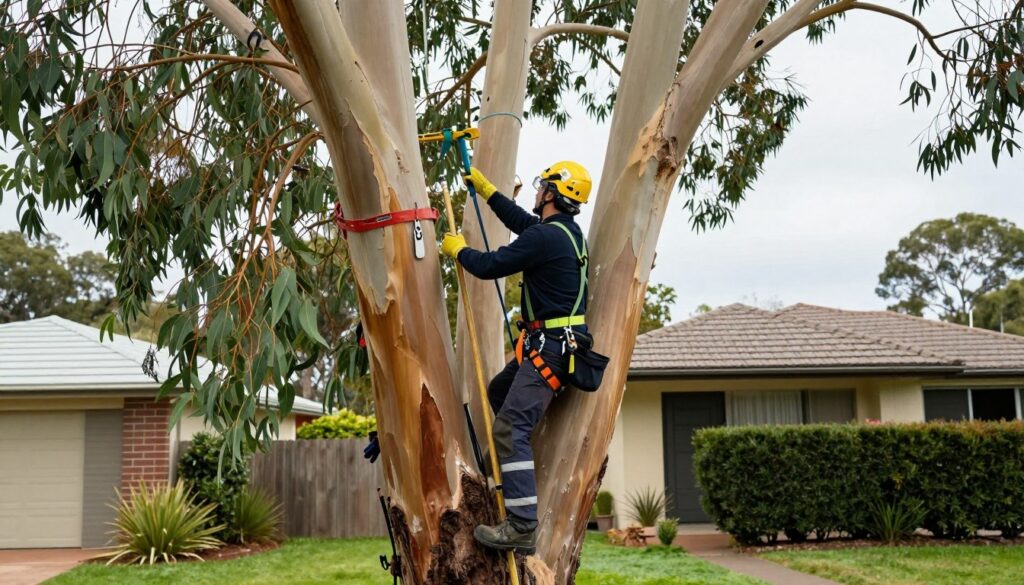
Sectional dismantling techniques safely remove trees in confined spaces near structures, powerlines, and neighbouring properties. The process involves systematic branch removal, controlled trunk sectioning, and complete stump extraction.
- ✔️ Hazardous tree assessment and removal
- ✔️ Storm-damaged tree emergency extraction
- ✔️ Root system excavation and grinding
- ✔️ Complete site debris removal and cleanup
- ✔️ Council permit application assistance
Expert Tree Lopping Services
Crown reduction, deadwood removal, and canopy thinning preserve tree health while addressing safety concerns. Professional tree lopping maintains structural integrity whilst reducing wind resistance and eliminating hazardous overhangs.
- ✔️ Strategic crown reduction techniques
- ✔️ Deadwood and diseased branch removal
- ✔️ Powerline clearance compliance cutting
- ✔️ Weight distribution rebalancing
- ✔️ Storm preparation canopy management
Complimentary Property Assessment Available
Qualified arborists evaluate tree health, structural stability, and potential risks during on-site inspections. Receive detailed recommendations for tree pruning, removal requirements, and council compliance obligations specific to your Hunters Hill property.
Professional Credentials and Insurance Coverage
Tree services require specific qualifications, comprehensive insurance protection, and specialised equipment to safely execute complex arboricultural operations in residential environments.
🎓 Professional Expertise
All team members hold current AQF Level 3 Arboriculture qualifications issued by nationally recognised training organisations. Ongoing professional development ensures compliance with Australian Standards AS4373-2007 for tree pruning and AS2870 for residential foundations near trees.
- ✅ AQF Level 3 Arboriculture certification
- ✅ Tree risk assessment qualified
- ✅ Advanced rigging techniques trained
- ✅ First aid and CPR certified
🛡️ Insurance Protection
Twenty million dollar public liability insurance coverage protects property owners against damage to structures, vehicles, fencing, and neighbouring properties. Workers compensation insurance ensures all team members receive coverage during tree removal operations.
- ✅ $20M public liability insurance
- ✅ Full workers compensation coverage
- ✅ Professional indemnity protection
- ✅ Equipment damage insurance
⚙️ Specialised Equipment
Modern climbing equipment, rigging systems, and wood processing machinery enable safe tree removal in confined residential spaces. Stump grinding machines with narrow access capabilities navigate tight side passages common in Hunters Hill properties.
- ✅ Advanced climbing and rigging systems
- ✅ Narrow-access stump grinders
- ✅ Wood chipping and mulching equipment
- ✅ Elevated work platform vehicles
Advanced Tree Pruning and Tree Trimming Techniques
Scientific pruning methods promote tree health, structural integrity, and longevity. Understanding different tree pruning approaches helps property owners select appropriate care strategies for their trees.
Crown Reduction Pruning
Systematic removal of end portions of branches reduces overall tree height and spread. This technique maintains natural tree shape whilst decreasing wind resistance and weight load on major limbs.
Crown reduction becomes necessary when trees outgrow their allocated space, threaten overhead powerlines, or develop structural imbalances from uneven growth patterns. Qualified arborists remove no more than thirty percent of living crown in a single pruning session to avoid tree stress.
Deadwood and Hazard Removal
Dead branches pose significant safety risks through unpredictable failure during storms or high winds. Professional deadwood removal eliminates these hazards whilst improving tree appearance and reducing disease spread.
Arborists identify deadwood through bark condition assessment, branch flexibility testing, and foliage presence evaluation. Removal cuts follow proper pruning standards to prevent decay entry points and promote compartmentalisation of wounds.
Structural Pruning for Young Trees
Early intervention establishes strong branch architecture in developing trees. Structural tree trimming corrects competing leaders, removes crossing branches, and balances weight distribution for long-term stability.
Investment in structural pruning during the first fifteen years of tree growth prevents costly corrective work on mature specimens. This approach significantly reduces future safety risks and extends tree lifespan in urban landscapes.
Professional Stump Grinding and Root Removal
Complete stump removal eliminates trip hazards, prevents regrowth, and frees valuable garden space for replanting or construction projects. Modern stump grinding machinery reduces stumps to wood chips below ground level.
Grinding Process and Depth
Stump grinders use rotating cutting wheels with carbide teeth to pulverise wood and root material. Standard grinding extends thirty centimetres below ground surface, sufficient for most landscaping applications.
Deeper grinding to sixty centimetres becomes necessary when installing swimming pools, building extensions, or planting large replacement trees. The grinding process produces significant quantities of wood chip mulch suitable for garden bed application.
Root System Management
Large root systems extending under driveways, pathways, or building foundations require careful assessment before grinding operations. Strategic root pruning prevents surface uplift whilst maintaining soil stability around structures.
Tree roots near sewer lines, stormwater drains, or underground utilities demand specialised cutting techniques. Professional arborists coordinate with utility providers to ensure safe root removal near critical infrastructure.
Emergency Tree Services and Storm Response
Severe weather events cause immediate tree failures requiring urgent professional response. Emergency tree removal services operate around the clock to address dangerous situations threatening property and personal safety.
Storm Damage Assessment
Post-storm tree evaluation identifies structural failures, hanging branches, and split trunks requiring immediate attention. Qualified arborists assess risk levels and prioritise removal sequences to safely address multiple hazards.
Insurance documentation during emergency callouts includes detailed photography, written damage assessments, and professional recommendations. This evidence supports insurance claims whilst protecting property owners from liability concerns.
Powerline Clearance Protocols
Trees contacting electrical infrastructure require immediate coordination with electricity providers. Professional tree services follow NALL (National Association of Local Councils) protocols for vegetation management near powerlines.
Emergency cutting near live powerlines demands specialist training and equipment. Arborists maintain minimum clearance distances whilst awaiting utility company attendance to de-energise affected circuits.
Building Impact Mitigation
Trees fallen against structures require systematic dismantling to prevent additional damage during removal. Rigging techniques distribute load forces away from buildings whilst sections are lowered safely to ground level.
Temporary weather protection measures prevent further interior damage whilst emergency tree removal proceeds. Coordinated response with building contractors ensures comprehensive property protection throughout the emergency process.
Council Compliance and Permit Requirements
Hunters Hill Council enforces strict tree preservation regulations protecting significant trees throughout the local government area. Understanding permit requirements prevents costly fines and project delays.
📋 Free Council Permit Checklist
Download the comprehensive guide detailing Hunters Hill Council tree removal permit requirements, application procedures, and approval timeframes. This resource includes measurement guidelines, heritage tree identification criteria, and exemption categories.
Significant Tree Regulations
Trees exceeding specific height or trunk diameter thresholds require development application approval before removal. Hunters Hill Council designates trees taller than five metres or with trunk circumferences exceeding three hundred millimetres at one metre height as significant vegetation.
Heritage Conservation Area restrictions impose additional controls on tree removal within designated precincts. Properties in these zones face stricter assessment criteria and often require heritage consultant reports supporting removal applications.
Exempt Development Provisions
Certain circumstances permit tree removal without formal development applications. Dead trees, trees posing immediate safety threats, and noxious weed species qualify for exemption provisions under specific conditions.
Professional arborist reports documenting tree condition support exemption claims. Detailed evidence including photographs, structural assessments, and safety risk evaluations strengthen applications under exempt development provisions.
Comprehensive Tree Care Solutions Across Hunters Hill
The team services all suburbs within the Hunters Hill municipality, addressing the unique challenges presented by the area’s mature tree population, sloping topography, and proximity to Sydney Harbour waterways.
Residential Property Tree Services
Established gardens throughout Hunters Hill feature large eucalyptus, fig, and exotic species requiring regular maintenance. Professional tree care preserves property values whilst managing the risks associated with aging specimens in densely populated neighbourhoods.
Narrow block widths and heritage building proximity demand precision cutting techniques. Arborists employ advanced rigging systems to remove trees safely without damaging heritage facades, sandstone walls, or heritage-listed garden features.
Commercial and Strata Property Maintenance
Body corporate communities and commercial properties require scheduled tree trimming to maintain public liability insurance compliance. Regular maintenance programs reduce long-term costs whilst ensuring pedestrian safety around common areas and car parks.
Strata managers receive detailed work reports documenting completed services, identified risks, and recommended future maintenance. This documentation supports duty of care obligations and provides evidence of proactive property management.
Safety Standards and Risk Management
Tree removal operations involve significant hazards requiring comprehensive safety management systems. Professional arborists implement multiple safety layers protecting workers, property owners, and the general public.
Pre-Work Safety Planning
Every job commences with site hazard assessment identifying powerlines, underground services, access constraints, and fall zones. Detailed job safety analyses document specific risks and control measures for each unique site.
Traffic management plans protect workers and pedestrians when operations affect public roads or footpaths. Certified traffic controllers manage vehicle and pedestrian movements around active work zones.
Operational Safety Controls
Exclusion zones prevent unauthorised entry beneath active cutting areas. Physical barriers, warning signage, and designated spotters maintain security perimeters throughout operations involving overhead work.
Communication protocols using two-way radios coordinate activities between ground crew and climbing arborists. Clear signals prevent accidents during complex rigging manoeuvres and load lowering sequences.
Equipment Maintenance and Inspection
Daily pre-start inspections verify climbing equipment, cutting tools, and rigging hardware meet manufacturer specifications. Worn or damaged equipment receives immediate replacement preventing equipment failure incidents.
Annual independent inspections by qualified safety equipment assessors certify major items including elevated work platforms, wood chippers, and stump grinding machinery. Maintenance records document all servicing and safety inspections.
Land Clearing and Site Preparation
Development projects requiring vegetation removal for building sites, swimming pool installation, or significant landscaping renovations demand comprehensive land clearing services. Professional site preparation ensures compliance with development consent conditions.
Selective Vegetation Removal
Development applications often specify trees approved for removal and those requiring retention. Accurate site surveying and clear tree marking prevent accidental removal of protected specimens during clearing operations.
Protected trees receive physical barriers and root zone protection during construction activities. Arborists monitor retained trees throughout building works ensuring compliance with tree protection plans.
Complete Site Clearing
Large-scale clearing for subdivision or major developments involves systematic tree felling, stump removal, and debris processing. Green waste material undergoes chipping for mulch production or removal to licensed waste facilities.
Final site grading and compaction testing prepare cleared land for construction activities. Coordination with builders and landscapers ensures smooth transitions between clearing, construction, and final landscaping phases.
Precision Tree Cutting and Sectional Dismantling
Complex tree cutting situations require advanced rigging techniques and precise cutting methods. Arborists employ sectional dismantling when standard felling techniques cannot be safely executed.
Confined Space Operations
Properties with minimal clearance between trees and structures demand careful branch-by-branch removal. Rigging ropes redirect falling sections away from buildings, controlling descent speed and impact locations.
Negative rigging techniques lower heavy wood sections without shock loading anchor points. This advanced method prevents damage to anchor trees whilst maintaining complete control throughout the cutting process.
Crane-Assisted Removal
Extremely large trees or highly constrained sites may require mobile crane support. Crane operators work in coordination with climbing arborists to lift entire tree sections clear of structures in single pieces.
This premium cutting method minimises operation duration and site disturbance. Properties with limited access for conventional ground-based operations benefit significantly from crane-assisted tree removal techniques.
Professional Arborist Expertise and Industry Standards
Qualified arborists possess specialised knowledge differentiating professional services from unqualified tree loppers. Formal training, ongoing education, and industry certification ensure competent tree care delivery.
AQF Certification Requirements
Australian Qualifications Framework Level 3 represents the minimum professional standard for practicing arborists. This qualification encompasses tree biology, risk assessment, climbing techniques, and Australian Standards compliance.
Continuing professional development maintains currency with evolving industry practices, equipment innovations, and regulatory changes. Professional arborists participate in regular training workshops, safety seminars, and technical skill development programs.
Industry Association Membership
Membership in professional bodies including Arboriculture Australia demonstrates commitment to industry best practices. Association members agree to ethical conduct standards and professional service delivery obligations.
These organisations provide technical resources, safety guidelines, and professional development opportunities supporting ongoing competence. Industry association directories help property owners identify qualified professionals within their local area.
Professional Grade Tools and Equipment Standards
Quality equipment directly impacts safety outcomes, work efficiency, and service results. Professional arborists invest significantly in commercial-grade tools designed for intensive daily use.
Climbing and Safety Equipment
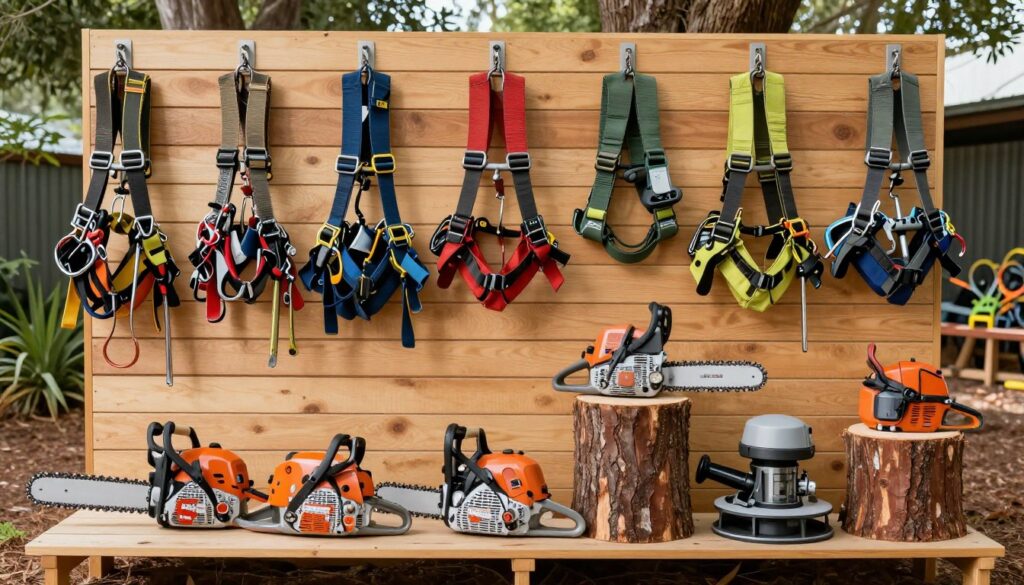
Arborist climbing systems include rated harnesses, positioning lanyards, and rope access equipment meeting international safety standards. Double-rope climbing techniques provide redundant fall protection during all elevated work activities.
Helmets, eye protection, hearing protection, and cut-resistant clothing form essential personal protective equipment. All safety gear undergoes regular inspection and replacement according to manufacturer recommendations.
Cutting and Processing Machinery
Professional chainsaws feature anti-vibration systems, chain brakes, and ergonomic designs reducing operator fatigue during extended use. Multiple saw sizes address different cutting requirements from fine pruning to large trunk sectioning.
Wood chippers process branches into uniform mulch material suitable for garden application or green waste disposal. Modern chipper designs incorporate safety features including feed stop bars and hydraulic reverse controls.
Proven Experience and Local Knowledge
Years of experience managing Hunters Hill’s unique tree population provides invaluable knowledge about local soil conditions, prevalent tree species, and common property challenges. This expertise enables accurate project assessment and appropriate solution recommendations.
Species-Specific Knowledge
Understanding different tree species’ growth patterns, structural characteristics, and maintenance requirements ensures appropriate care recommendations. Local experience identifies species-specific risks including brittle wood characteristics, decay susceptibility, and root behaviour patterns.
Native Australian species including eucalyptus, angophora, and acacia varieties demand different management approaches compared to exotic ornamental trees. Professional arborists tailor pruning techniques and timing to species-specific requirements.
Heritage Tree Management
Hunters Hill’s significant heritage tree population requires sensitive management balancing preservation with safety obligations. Experienced arborists recommend minimal-intervention approaches maximising tree retention whilst addressing legitimate risk concerns.
Heritage tree assessment considers historical significance, landscape contribution, and ecological value alongside structural condition. Comprehensive reports support development applications and council negotiations regarding heritage specimen management.
Frequently Asked Questions About Tree Services Hunters Hill
What factors determine tree removal costs in Hunters Hill?
Tree removal pricing reflects tree size, accessibility constraints, proximity to structures, and disposal requirements. Large trees exceeding fifteen metres height require extended labour time, specialised equipment, and multiple team members. Trees located near powerlines demand additional safety protocols and utility coordination increasing costs.
Access limitations requiring material handling through narrow side passages or across neighbouring properties add labour time. Stump grinding depth, debris removal distance, and council permit application assistance represent additional cost components. Professional quotes assess all site-specific factors providing accurate project pricing.
Contact the team on (02) 4708 9929 for detailed project assessment and transparent pricing.
Do I need council permission to remove trees on my Hunters Hill property?
Hunters Hill Council requires development applications for removing significant trees exceeding five metres height or three hundred millimetre trunk circumference measured at one metre above ground. Heritage Conservation Area properties face additional restrictions requiring consent for smaller specimens.
Exemptions apply for dead trees, immediately dangerous trees, and certain noxious species. Professional arborist reports documenting tree condition support exemption applications. Proceeding without required approvals risks substantial fines and potential restoration orders.
The team provides council permit application assistance and arborist reports supporting approval processes.
How does professional tree lopping differ from tree removal?
Tree lopping involves selective branch removal reducing crown size whilst retaining the tree. This process addresses safety concerns from overhanging branches, powerline interference, or excessive shading without complete tree elimination. Lopping maintains tree presence in landscapes where complete removal proves unnecessary or undesirable.
Tree removal eliminates the entire tree including trunk and root system. This comprehensive approach suits dead trees, severely diseased specimens, or trees conflicting with building projects. Removal creates space for replanting, construction activities, or landscape redesign.
Professional assessment determines the appropriate approach for specific property requirements and tree conditions.
What insurance coverage should professional tree services provide?
Legitimate tree services maintain minimum twenty million dollar public liability insurance covering property damage, personal injury, and third-party claims. This protection proves essential given the significant risks associated with tree removal operations near structures, vehicles, and neighbouring properties.
Workers compensation insurance protects all team members from workplace injury costs. Professional indemnity coverage addresses advice and recommendation liability. Property owners should request current insurance certificates before engaging tree services.
AusArborist Group maintains comprehensive insurance coverage protecting clients throughout all tree service operations.
When should emergency tree removal services be contacted?
Immediate professional response becomes necessary when trees fall on buildings, block essential access routes, contact powerlines, or present imminent collapse risks following storm damage. Split trunks, major branch failures, and trees leaning against structures demand urgent assessment.
Emergency services operate around the clock addressing dangerous situations beyond normal business hours. Initial response focuses on immediate safety hazards with comprehensive cleanup following once risks are controlled.
Emergency tree services available 24/7 – contact (02) 4708 9929 for immediate assistance.
Professional Tree Services Contact and Quote Request
Property owners requiring expert tree removal, professional tree pruning, stump grinding, or emergency tree services throughout Hunters Hill can request detailed project quotes and schedule on-site assessments.
Prefer to Speak Directly?
Professional consultation available Monday to Saturday, 7:00 AM to 6:00 PM
Emergency services available 24/7 for urgent situations
AusArborist Group services all properties throughout Hunters Hill municipality
Trusted Tree Care Solutions for Hunters Hill Properties
Professional arborist services protect property values, ensure resident safety, and maintain the leafy character defining Hunters Hill’s unique landscape. Qualified tree care professionals deliver compliant, insured solutions addressing tree removal, tree lopping, pruning, and emergency response requirements.
Property owners benefit from engaging AQF-certified arborists who understand local council regulations, heritage tree considerations, and the specific challenges presented by established residential areas. Comprehensive insurance coverage, modern equipment, and proven safety protocols ensure professional service delivery across all tree service categories.
Investment in professional tree services prevents property damage, eliminates safety risks, and ensures regulatory compliance throughout tree management projects. Experienced teams provide transparent quotes, detailed project planning, and efficient execution minimising disruption to daily property use.