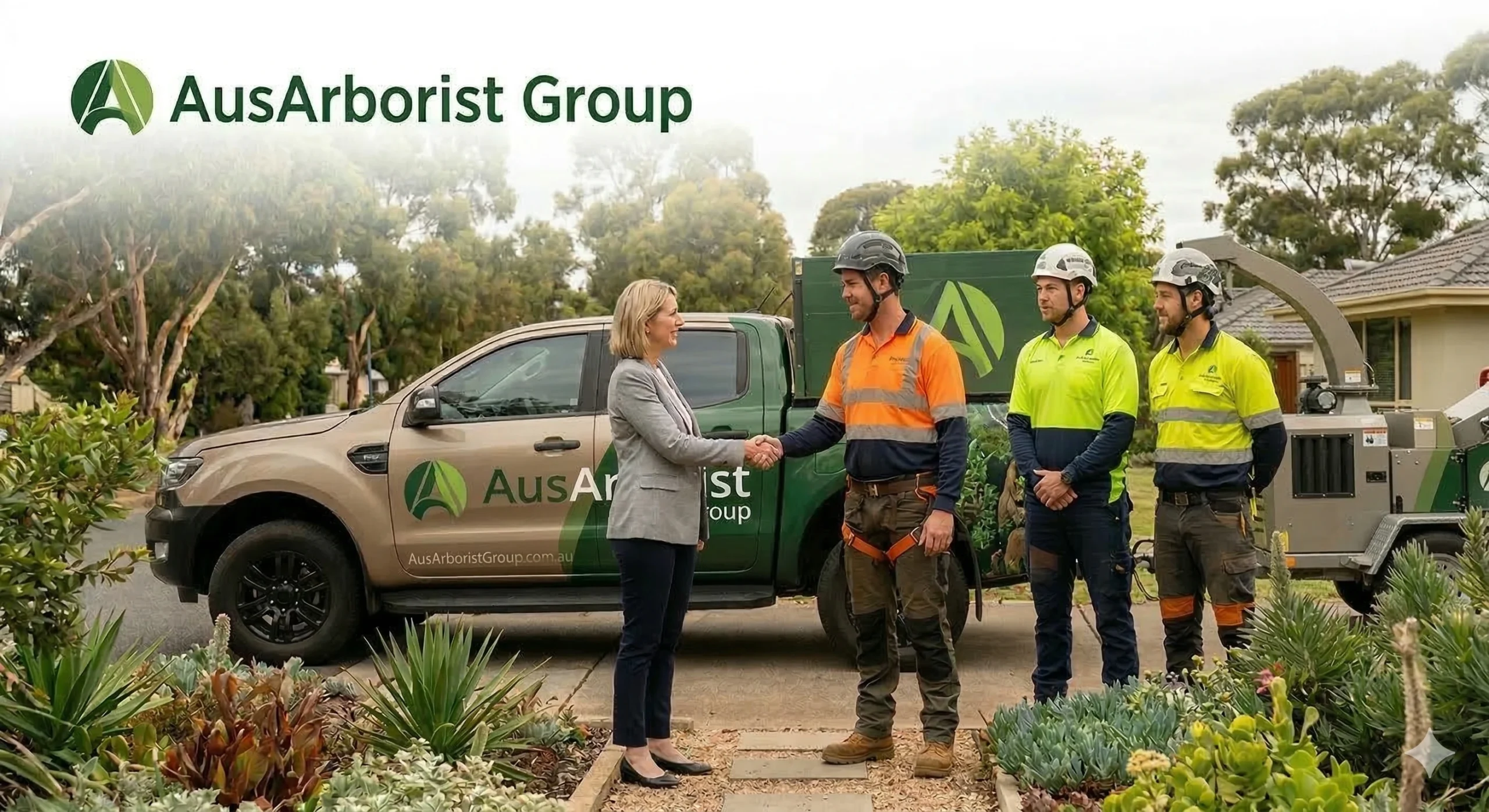
Property owners throughout St Ives 2075 face critical decisions when trees threaten structures, block sunlight, or require urgent removal after storm damage. The challenge extends beyond simply finding someone to cut down a tree. Residents need qualified arborists who understand council regulations, carry comprehensive insurance, and possess the specialized equipment to safely remove large trees near homes and power lines.
Professional tree services demand expertise that protects both property and people. A single miscalculation during tree removal can result in structural damage, personal injury, or costly legal complications. The north shore region presents unique challenges with mature eucalyptus specimens, dense suburban layouts, and strict local council requirements that inexperienced operators frequently overlook.
AusArborist Group delivers comprehensive tree care solutions backed by AQF-certified arborists and full public liability coverage. The experienced team manages everything from routine pruning to complex emergency tree removal, ensuring every job meets NALL compliance standards and local regulatory requirements.
Essential Tree Services for St Ives Properties
Property maintenance requires understanding the fundamental differences between tree removal and tree lopping services. Each approach serves distinct purposes and addresses specific property needs. The following comparison clarifies when each service delivers optimal results for residential and commercial sites.
Complete Tree Removal
Tree removal involves sectional dismantling and complete extraction of the tree structure from the property. This service becomes necessary when trees pose immediate safety risks or interfere with construction projects.
- ✔️ Dead or diseased trees threatening structures
- ✔️ Trees damaged beyond recovery after storms
- ✔️ Specimens interfering with building development
- ✔️ Root systems compromising foundations
- ✔️ Trees violating council setback requirements
- ✔️ Large trees obstructing power lines
Professional removal services include comprehensive site assessment, council permit assistance, sectional dismantling using rigging systems, stump grinding to ground level, and complete debris removal. The process requires specialized equipment including crane support for large specimens near structures.
Professional Tree Lopping and Pruning
Tree pruning maintains tree health while managing growth patterns and reducing safety hazards. Strategic branch removal preserves the tree while addressing specific property concerns and improving overall tree structure.
- ✔️ Crown reduction to manage tree height
- ✔️ Deadwood removal eliminating falling hazards
- ✔️ Clearance pruning for buildings and utilities
- ✔️ Weight reduction on extended limbs
- ✔️ Canopy thinning for light penetration
- ✔️ Structural pruning for young tree development
Expert pruning work follows Australian Standards AS 4373-2007 for tree trimming. Arborists assess branch structure, identify appropriate cutting points, and execute precise cuts that promote healing. The service maintains tree health while achieving property objectives for light, view, and safety clearances.
Free Property Assessment – No Obligation Quote Within 24 Hours
Qualified arborists conduct comprehensive site evaluations to assess tree health, identify risks, and recommend appropriate solutions. The assessment includes council requirement verification, job complexity analysis, and detailed cost estimates. Property owners receive professional recommendations without commitment or consultation fees.
Professional Expertise and Safety Standards
Tree service quality directly correlates with operator qualifications, insurance coverage, and equipment capabilities. The following credentials distinguish professional arborist operations from unqualified contractors who lack proper training and safety protocols.
🎓 AQF-Certified Arborists
Every team member holds Australian Qualifications Framework certification in arboriculture. This national standard ensures operators understand tree biology, proper cutting techniques, and risk assessment protocols.
- ✅ Certificate III in Arboriculture qualification
- ✅ Advanced rigging and dismantling certification
- ✅ Continuous professional development requirements
- ✅ Current first aid and emergency response training
- ✅ Chainsaw operation and maintenance proficiency
Qualified arborists identify disease symptoms, assess structural defects, and determine appropriate intervention strategies that unqualified operators miss. This expertise prevents unnecessary tree removal and ensures proper care for valuable specimens.
🛡️ Comprehensive Insurance Coverage
Full public liability insurance protecting property owners from financial risk remains mandatory for legitimate tree service operations. Coverage extends to property damage, personal injury, and third-party claims resulting from tree work.
- ✅ $20 million public liability insurance minimum
- ✅ Workers compensation for all team members
- ✅ Professional indemnity coverage for advice
- ✅ Equipment and vehicle insurance protection
- ✅ Coverage verification available before job commencement
Insurance documentation should be verified before any work begins on a property. Uninsured operators expose homeowners to significant financial liability if accidents occur during tree removal or pruning operations.
⚙️ Specialized Equipment Fleet
Professional tree services require purpose-built equipment that ensures safe, efficient completion of complex removal jobs. Investment in proper machinery separates qualified operators from those attempting dangerous work with inadequate tools.
- ✅ Crane trucks for controlled large tree removal
- ✅ Elevated work platforms for precise access
- ✅ Industrial wood chippers processing debris on-site
- ✅ Stump grinding machines for below-grade removal
- ✅ Rigging equipment meeting load-rated specifications
Equipment maintenance schedules ensure reliable operation and safety compliance. Regular servicing, load testing, and replacement of worn components maintains the safety standards essential for tree work near structures and power lines.
Advanced Tree Removal Techniques
Complex tree removal near structures demands specialized techniques that control every stage of the dismantling process. Professional arborists employ multiple methods depending on tree size, location constraints, and proximity to buildings or utilities.
Sectional Dismantling Process
Sectional dismantling removes trees in controlled segments when space limitations prevent traditional felling. This method proves essential for large trees surrounded by structures, fences, or valuable landscaping that must remain undamaged.
The process begins with comprehensive site assessment and establishing exclusion zones around the work area. Climbers ascend the tree using rope access systems, securing each section before cutting. Rigging ropes control the descent of cut sections, preventing uncontrolled falls that could damage property.
Top-Down Sectional Removal
- ✔️ Climber establishes secure anchor points in tree crown
- ✔️ Removal begins at highest accessible point
- ✔️ Small sections cut and lowered using rigging systems
- ✔️ Progressive descent continues to ground level
- ✔️ Trunk sections removed in manageable pieces
- ✔️ Stump cut to ground level or below grade
Crane-Assisted Large Tree Removal
- ✔️ Crane positioning provides optimal lifting angles
- ✔️ Large sections attached before cutting
- ✔️ Controlled lift prevents swing and property contact
- ✔️ Sections placed directly into chipper or truck
- ✔️ Faster completion than traditional climbing methods
- ✔️ Reduced risk for confined site conditions
Directional Felling for Open Areas
Directional felling applies when sufficient space allows controlled tree drop without sectional dismantling. This efficient method requires precise calculations of tree weight distribution, lean direction, and fall path clearance.
Arborists assess wind conditions, tree balance, and ground slope before determining felling direction. Strategic cuts create a hinge that controls fall direction as the tree descends. The technique demands extensive experience to account for variables affecting fall path accuracy.
Safety Consideration:
Directional felling requires minimum clearance zones twice the tree height in the intended fall direction. Dense suburban areas typically lack adequate space, necessitating sectional dismantling methods instead.
Stump Grinding and Root Management
Complete tree removal includes stump grinding to eliminate tripping hazards and prepare sites for new landscaping or construction. Grinding machines reduce stumps below ground level, removing visible wood and major root connections.
Depth requirements vary based on intended site use. Turf installation requires grinding 100-150mm below grade, while paving or construction projects may need deeper grinding to prevent future settlement issues. Root systems decompose naturally after stump removal, though large roots near structures may require mechanical extraction.
- ✔️ Stump grinding to specified depth below grade
- ✔️ Root ball excavation for construction sites
- ✔️ Mulch removal or retention based on preferences
- ✔️ Cavity filling preventing depression formation
- ✔️ Site leveling and debris cleanup completion
Emergency Tree Services and Storm Response
Severe weather events create urgent tree hazards requiring immediate professional response. Storm-damaged trees pose significant risks when branches hang precariously over structures or when partially uprooted trees threaten to collapse onto buildings or vehicles.
🚨 Emergency Tree Removal – Same Day Response Available
Dangerous tree situations demand immediate attention. The experienced team provides 24/7 emergency response for storm damage, fallen trees blocking access, and hazardous branches threatening structures. Priority scheduling ensures rapid deployment to address critical safety situations.
Common Emergency Situations
Emergency tree services address various urgent scenarios where delayed response increases risk of property damage or personal injury. Rapid assessment and strategic removal minimize further damage while securing the immediate area.
Storm Damage Response
- ⚠️ Partially uprooted trees leaning on structures
- ⚠️ Large branches broken and hanging in canopy
- ⚠️ Trees fallen across driveways or access roads
- ⚠️ Split trunks creating imminent collapse risk
- ⚠️ Trees contacting power lines after storms
Hazard Tree Assessment
- ⚠️ Sudden lean development indicating root failure
- ⚠️ Large dead branches over high-traffic areas
- ⚠️ Cracked trunks showing structural weakness
- ⚠️ Root lifting visible around tree base
- ⚠️ Fungal fruiting bodies indicating decay
Emergency Response Protocol
Emergency tree situations follow systematic response procedures that prioritize safety while addressing the immediate hazard. Assessment begins before physical intervention to ensure appropriate equipment deployment and minimize additional risks.
- Initial Contact and Triage: Emergency calls receive immediate assessment to determine urgency level and required resources.
- Site Safety Evaluation: Arborists identify immediate dangers including power line contact, unstable structures, and access restrictions.
- Hazard Mitigation: Critical risks receive immediate attention through strategic cutting or temporary support installation.
- Systematic Removal: Damaged trees undergo controlled dismantling using techniques appropriate to stability conditions.
- Site Securing: Debris removal and hazard elimination ensures property safety before crew departure.
Emergency work may require coordination with utility companies when trees contact power lines. Arborists never attempt removal of trees touching electrical infrastructure without confirmed power disconnection by authorized utility personnel.
24-Hour Emergency Tree Service
Critical tree emergencies receive priority response with crews dispatched rapidly to secure dangerous situations. The emergency service operates around the clock, providing immediate assistance when storm damage or sudden tree failure threatens property and safety.
Council Permits and Regulatory Compliance
Tree removal in St Ives requires navigating council regulations that protect significant trees while allowing necessary removal for safety or development purposes. Understanding permit requirements prevents costly delays and potential legal complications.
Ku-ring-gai Council Tree Preservation Requirements
Ku-ring-gai Council maintains strict tree preservation policies reflecting the area’s significant bushland character. The local environmental plan protects trees meeting specific size criteria, requiring formal approval before removal or significant pruning.
Protected trees generally include specimens exceeding 5 meters in height or those with trunk diameters greater than 150mm measured at 1 meter above ground level. Additional protections apply to trees within heritage conservation areas or on environmentally sensitive land.
Important:
Removing protected trees without council approval may result in fines exceeding $100,000 for individuals or $500,000 for corporations under environmental protection legislation. Professional arborists verify regulatory requirements before commencing any tree work.
Permit Application Process
Obtaining tree removal permits requires comprehensive documentation supporting the application. Council assessment considers tree health, safety risks, development requirements, and proposed replacement planting when evaluating applications.
- 📝 Arborist report documenting tree condition and risks
- 📝 Site plan showing tree location relative to structures
- 📝 Photographic evidence of tree health or damage
- 📝 Justification statement explaining removal necessity
- 📝 Replacement planting proposal where required
- 📝 Application fees and processing timeframes
Exempt Development Provisions
Certain situations allow tree removal without formal development consent under exempt development provisions. These exemptions typically apply to dead trees, immediate safety hazards, or trees below protection thresholds.
Common Exemption Categories
- ✅ Trees confirmed dead by qualified arborist
- ✅ Specimens posing imminent safety risks
- ✅ Trees smaller than protection thresholds
- ✅ Removal required for essential utility work
- ✅ Emergency situations threatening property
Even when exemptions apply, documentation proving eligibility provides protection against future compliance questions. Professional arborist assessments clearly establish whether proposed work qualifies for exempt status or requires formal approval.
Property owners bear responsibility for ensuring regulatory compliance regardless of contractor claims. Verification of permit requirements before work commencement protects against enforcement actions and preserves property transaction integrity.
📋 Free Download: St Ives Tree Removal Permit Checklist
Comprehensive guide detailing Ku-ring-gai Council requirements, exemption criteria, application procedures, and documentation checklists. This resource helps property owners understand regulatory obligations before commencing tree work projects.
Enter email address to receive the complete permit checklist and council compliance guide.
Land Clearing and Site Preparation
Large-scale vegetation removal requires systematic planning that balances project timelines with environmental compliance and safety protocols. Land clearing services prepare sites for construction, landscaping renovation, or bushfire hazard reduction.
Comprehensive Site Clearing Process
Professional land clearing extends beyond simple tree removal to address complete vegetation management, root extraction, and site grading. The systematic approach ensures properties meet development requirements while maintaining environmental compliance.
Vegetation Assessment
Initial site evaluation identifies all vegetation requiring removal, protected species necessitating retention, and environmental constraints affecting clearing methods.
Selective Clearing
Strategic removal preserves valuable specimens while eliminating unwanted growth, maintaining erosion control, and protecting neighboring properties from clearing impacts.
Site Finishing
Complete debris removal, stump grinding, root extraction, and initial grading prepare cleared areas for subsequent construction or landscaping activities.
Equipment for Large-Scale Clearing
Efficient land clearing demands heavy equipment capable of processing significant vegetation volumes while minimizing soil disturbance. Equipment selection depends on site size, vegetation density, and access constraints.
- ✔️ Mulching machines processing vegetation on-site
- ✔️ Excavators for root extraction and grading
- ✔️ Bulldozers clearing dense vegetation areas
- ✔️ Tipper trucks removing debris from site
- ✔️ Stump grinders eliminating remaining stumps
- ✔️ Tracked chippers accessing difficult terrain
Environmental Compliance for Land Clearing
Land clearing projects must address environmental legislation protecting native vegetation, endangered species habitat, and waterway buffers. Compliance requirements vary based on site characteristics and clearing extent.
Properties exceeding certain clearing thresholds require environmental impact assessment before approval. Vegetation management plans detail proposed clearing extent, retention areas, and erosion control measures implemented during and after clearing operations.
Bushfire Compliance:
Properties in bushfire-prone areas must maintain asset protection zones with specific vegetation management requirements. Land clearing for bushfire compliance follows strict guidelines regarding tree retention, understorey removal, and fuel load reduction.
Tree Care and Health Management
Maintaining tree health requires understanding biological processes, recognizing disease symptoms, and implementing appropriate intervention strategies. Professional tree care extends specimen lifespan while reducing risks associated with declining tree health.
Common Tree Health Issues
Trees face numerous health challenges from pests, diseases, environmental stress, and structural defects. Early identification enables effective treatment before conditions progress to irreversible decline.
Disease Recognition
- 🔍 Fungal infections causing foliage discoloration
- 🔍 Canker diseases creating bark lesions
- 🔍 Root rot from poor drainage conditions
- 🔍 Bacterial infections in wounds
- 🔍 Virus symptoms in leaf patterns
Qualified arborists identify disease through symptom analysis, understanding pathogen life cycles, and recognizing conditions favoring infection development.
Pest Management
- 🐛 Borers creating galleries in wood tissue
- 🐛 Scale insects extracting plant nutrients
- 🐛 Leaf-eating insects causing defoliation
- 🐛 Termites compromising structural integrity
- 🐛 Psyllids affecting eucalyptus species
Integrated pest management combines monitoring, biological controls, and targeted treatments minimizing environmental impact while protecting tree health.
Structural Pruning for Long-Term Health
Strategic pruning during early tree development establishes strong structure reducing future failure risks. Proper technique selection and timing optimize healing response while achieving desired structural outcomes.
Young tree pruning focuses on developing single dominant leaders, establishing appropriate branch spacing, and removing defects before they enlarge. Mature tree pruning addresses structural weaknesses, reduces wind resistance, and removes dead or damaged branches.
✅ Proper Pruning Practices
- ✔️ Cuts made outside branch collar
- ✔️ Branch reduction maintains subordination
- ✔️ Removal limited to 25% of canopy per season
- ✔️ Clean cuts promote rapid wound closure
- ✔️ Work scheduled during dormant periods
- ✔️ Equipment sterilized between trees
❌ Harmful Pruning Methods
- ⚠️ Topping removing entire canopy sections
- ⚠️ Flush cuts damaging branch collars
- ⚠️ Excessive removal stressing trees
- ⚠️ Stub cuts preventing proper healing
- ⚠️ Pruning during active growth periods
- ⚠️ Using contaminated cutting tools
Soil and Root Zone Management
Root health directly influences above-ground tree vitality. Soil compaction, drainage issues, and nutrient deficiencies create stress conditions manifesting as canopy decline symptoms.
Professional root zone management addresses compaction through aeration, improves drainage with strategic grading, and corrects nutrient deficiencies via targeted fertilization programs. Protection of critical root zones during construction prevents irreversible damage to established trees.
- 🌱 Soil testing identifying nutrient deficiencies
- 🌱 Aeration reducing compaction effects
- 🌱 Mulching maintaining soil moisture
- 🌱 Root barrier installation preventing conflicts
- 🌱 Drainage improvements addressing waterlogging
- 🌱 Construction impact mitigation strategies
Workplace Safety and Risk Management
Tree work ranks among the most hazardous occupations, demanding rigorous safety protocols that protect workers and bystanders. Professional operations implement comprehensive safety management systems addressing all identified risks.
Site Safety Planning
Every job commences with detailed site safety assessment identifying hazards and implementing control measures before physical work begins. Risk assessment documentation provides systematic evaluation of all potential dangers.
Hazard Identification
Comprehensive site inspection reveals overhead power lines, underground services, unstable ground, traffic exposure, and environmental factors affecting safe work execution.
Control Measures
Documented procedures eliminate or minimize identified risks through engineering controls, administrative processes, and personal protective equipment requirements.
Emergency Response
Established protocols ensure rapid response to incidents including first aid provision, emergency service notification, and incident documentation for investigation.
Personal Protective Equipment Standards
Comprehensive PPE requirements protect workers from multiple hazards inherent to tree work operations. Equipment specifications meet or exceed Australian Standards for industrial safety gear.
- 🛡️ Certified climbing helmets with face protection
- 🛡️ Full-body harnesses rated for fall arrest
- 🛡️ Chainsaw-resistant trousers and boots
- 🛡️ Cut-resistant gloves for handling operations
- 🛡️ Hearing protection during machinery operation
- 🛡️ High-visibility clothing for traffic exposure
Power Line Safety Protocols
Trees near electrical infrastructure require specialized safety procedures preventing electrocution hazards. Minimum approach distances vary based on voltage levels, with unauthorized personnel prohibited from working within exclusion zones.
Only workers holding specific electrical safety qualifications may approach within restricted distances of energized conductors. Complex situations require utility company coordination to de-energize lines before work proceeds.
⚠️ Critical Safety Notice:
Never attempt tree work near power lines without professional qualification and utility notification. Electricity can arc across air gaps, causing severe injury or fatality without direct contact.
Ground Operations Safety
Workers managing ground operations face hazards from falling debris, machinery operation, and traffic exposure. Clearly defined exclusion zones prevent unauthorized entry into drop zones during tree dismantling.
Effective communication systems between climbers and ground crew ensure coordinated operations. Standard signals and radio communication maintain awareness of activities preventing accidents from miscommunication or assumption.
Modern Equipment and Technology Integration
Equipment advancement continually improves efficiency, safety, and capability in professional tree services. Investment in modern machinery enables completion of complex jobs previously requiring excessive time or presenting unacceptable risks.
Specialized Machinery Applications
Purpose-designed equipment addresses specific challenges in tree removal, debris processing, and site access. Each machine type fills particular operational requirements based on job specifications and site constraints.
Crane Trucks and Lifting Equipment
Hydraulic cranes provide controlled lifting capacity essential for removing large tree sections near structures. Variable boom length and capacity specifications match equipment to job requirements.
- ✔️ Precision placement preventing property damage
- ✔️ Reduced time compared to traditional methods
- ✔️ Access over obstacles via boom extension
- ✔️ Load monitoring ensuring safe operation
- ✔️ Stabilization systems for level deployment
Elevated Work Platforms
Boom lifts and spider platforms provide stable work positioning for pruning and dismantling operations. Articulating booms navigate around obstacles while maintaining operator safety.
- ✔️ Stable platform for precise cutting work
- ✔️ Reduced climber fatigue on extended jobs
- ✔️ Multiple workers accommodated simultaneously
- ✔️ Outrigger systems ensuring stability
- ✔️ Track systems accessing difficult terrain
Debris Processing Equipment
Efficient debris management maintains job site organization and reduces cleanup time. Industrial chippers process branches into mulch while stump grinders eliminate remaining root systems below grade.
Modern wood chippers handle substantial branch diameter, processing material rapidly to minimize on-site accumulation. Safety features including automatic feed systems and emergency stops protect operators during continuous operation.
- ✅ Capacity specifications matching job scale
- ✅ Discharge chute directing mulch into trucks
- ✅ Feed roller systems processing material safely
- ✅ Sound attenuation reducing neighborhood disturbance
- ✅ Maintenance schedules ensuring reliable operation
Diagnostic Technology
Advanced assessment tools enable non-invasive evaluation of internal tree structure. Sonic tomography and resistograph testing detect decay not visible through external inspection, informing retention versus removal decisions.
These technologies produce detailed images of internal wood condition, identifying cavities, decay columns, and structural weaknesses. Data-driven assessment replaces subjective visual evaluation with quantifiable measurements supporting professional recommendations.
Tree Service Pricing and Cost Factors
Tree service costs vary substantially based on job complexity, equipment requirements, and site-specific factors. Understanding pricing components helps property owners evaluate quotes and recognize value versus merely comparing bottom-line figures.
Primary Cost Determinants
Multiple variables influence final pricing for tree removal and pruning services. Professional estimates account for all factors affecting labor time, equipment needs, and disposal requirements.
- 💰 Tree Size and Species: Height and diameter directly impact removal complexity and time requirements.
- 💰 Location and Access: Proximity to structures, overhead lines, and equipment access routes affect methodology.
- 💰 Condition Assessment: Dead or diseased trees present different challenges than healthy specimens.
- 💰 Site Obstacles: Fences, gardens, pools, and structures complicate debris management.
- 💰 Disposal Requirements: Mulch retention, wood recovery, or complete removal affect costs.
- 💰 Council Compliance: Permit applications and arborist reports add to project expenses.
Large trees exceeding 20 meters require extensive dismantling work, multiple crew members, and specialized equipment. Small trees under 5 meters may need only basic equipment and minimal time investment.
Emergency work commands premium pricing reflecting after-hours availability, rapid response requirements, and priority scheduling over planned maintenance jobs. The urgency factor compensates for operational disruption and crew availability costs.
Obtaining multiple quotes provides price comparison, but evaluation should extend beyond cost alone. Verification of insurance coverage, qualification levels, and safety compliance protects against selecting underqualified operators offering attractive pricing.
Additional Service Costs
Comprehensive tree projects often include services beyond basic removal or pruning. These additional components ensure complete job completion and property restoration.
| Service Component | Typical Application | Cost Impact |
| Stump Grinding | Removal below grade for replanting areas | Based on stump diameter and access |
| Root Extraction | Construction sites requiring complete removal | Excavation equipment and disposal charges |
| Wood Recovery | Valuable timber species for milling | May offset removal costs through sale |
| Site Restoration | Turf repair and landscape reinstatement | Materials and additional labor time |
| Council Applications | Protected tree removal permits | Arborist reports and application fees |
Value Indicators in Service Selection
Price represents only one component in contractor selection. Service value encompasses insurance protection, operational safety, completion timelines, and post-job site condition.
- ✅ Comprehensive insurance documentation provided
- ✅ Qualified arborist certifications verified
- ✅ Detailed written quotes specifying all work
- ✅ Equipment appropriate to job requirements
- ✅ Clear timeline estimates and scheduling
- ✅ Complete cleanup and debris removal included
- ✅ Professional communication and responsiveness
Extremely low quotes often indicate uninsured operators, inadequate equipment, or inexperienced personnel. The apparent savings evaporate when property damage occurs or injuries result from improper work execution.
💰 Transparent Pricing – Detailed Written Quotes
Comprehensive quotes detail all work components, equipment requirements, disposal procedures, and timeline estimates. Property owners receive clear pricing breakdowns before commitment, eliminating surprise charges and ensuring complete understanding of service scope.
Seasonal Tree Work Considerations
Optimal timing for tree services depends on species characteristics, intended outcomes, and seasonal growth patterns. Strategic scheduling maximizes results while minimizing stress on trees and surrounding landscapes.
Pruning Season Recommendations
Different tree species respond optimally to pruning during specific seasons. Timing considerations balance sap flow patterns, disease transmission risks, and healing response efficiency.
Winter Pruning (June-August)
Dormant season work suits most deciduous species and allows clear canopy visibility for structural assessment.
- ❄️ Reduced disease transmission during dormancy
- ❄️ Minimal sap loss from pruning wounds
- ❄️ Clear structure visibility without foliage
- ❄️ Lower stress response from trees
- ❄️ Ideal for major structural work
Summer Pruning (December-February)
Active growth period pruning controls vigor and suits specific species requiring warm-season intervention.
- ☀️ Rapid wound closure during growth
- ☀️ Growth suppression through shoot removal
- ☀️ Suitable for species bleeding excessively in winter
- ☀️ Immediate canopy reduction visible
- ☀️ Risk management for storm season
Storm Season Preparation
Pre-storm pruning reduces wind resistance and eliminates weak branches likely to fail during severe weather. Proactive maintenance prevents emergency situations requiring urgent response after storm events.
Risk assessment identifies trees requiring attention before storm season. Dead branches, weak unions, and extended limbs over structures receive priority for removal or reduction pruning.
- ✔️ Deadwood removal eliminating projectiles
- ✔️ Crown thinning reducing wind resistance
- ✔️ Weak branch removal preventing failure
- ✔️ Clearance pruning creating structure separation
- ✔️ Health assessment identifying declining trees
Optimal Removal Timing
Tree removal proceeds year-round when necessitated by safety concerns or development timelines. However, seasonal factors influence job ease and site impact.
Dry soil conditions during summer facilitate equipment access and minimize site disturbance. Winter removal may encounter muddy conditions complicating machinery operation and increasing lawn damage risks.
Nesting season considerations protect native birds. Arborists inspect trees for active nests before removal, delaying work if protected species occupy the tree during breeding periods.
North Shore Tree Service Challenges
The north shore region presents unique characteristics affecting tree service delivery. Understanding local conditions ensures appropriate methodology selection and regulatory compliance.
Characteristic North Shore Tree Species
Native and introduced species common throughout the area require specific knowledge for proper care and removal. Species characteristics influence work methodology and safety considerations.
Eucalyptus Species
Dominant native trees including Angophora, Sydney Blue Gum, and Blackbutt present specific challenges through brittle wood and unpredictable failure patterns.
Turpentine Trees
Large specimens exceed 30 meters requiring extensive dismantling. Dense wood resists cutting equipment, extending job duration and equipment wear.
Introduced Ornamentals
Deciduous exotics and conifers introduced for landscaping present different structural characteristics requiring adapted techniques.
Dense Suburban Context
Closely spaced properties throughout the north shore limit conventional removal techniques. Sectional dismantling becomes standard methodology rather than exception.
Access restrictions from narrow driveways, steep slopes, and rear-yard locations demand compact equipment and manual handling capabilities. Crane operations require street access and traffic management coordination.
Heritage and Environmental Overlays
Multiple heritage conservation areas and environmental protection zones affect tree work permissions. Properties within these designations face additional approval requirements beyond standard tree preservation controls.
Heritage significance may protect specific trees regardless of size or condition. Environmental constraints limit clearing on bushland interfaces and around waterways. Professional navigation of these overlapping regulations prevents compliance violations.
Local Knowledge Advantage:
Familiarity with north shore council variations, common species characteristics, and typical site constraints enables efficient job planning and accurate quotation. Experience in the region translates directly to smoother project execution.
Frequently Asked Questions
What factors determine tree removal cost in St Ives?
Tree removal pricing depends on multiple variables including tree height and diameter, proximity to structures, access for equipment, tree health and condition, disposal requirements, and council permit needs. Large trees exceeding 15 meters near buildings require sectional dismantling with specialized rigging, increasing labor time and equipment costs compared to open-area removals.
Additional factors include the number of trees requiring work, stump grinding requirements, site restoration needs, and urgency level for emergency situations. Professional quotes itemize these components providing transparent pricing breakdowns.
Typical residential tree removal ranges from moderate costs for small specimens to substantial investment for large, complex removals near structures. Multiple quote comparison ensures competitive pricing while verifying insurance and qualification levels.
Do I need council approval to remove trees on my St Ives property?
Ku-ring-gai Council regulates tree removal through local environmental plans protecting significant vegetation. Trees exceeding 5 meters in height or 150mm trunk diameter measured at 1 meter above ground generally require development consent before removal. Additional protections apply within heritage conservation areas and on environmentally sensitive land.
Exemptions exist for dead trees confirmed by arborist assessment, immediate safety hazards, and specimens below protection thresholds. However, documentation proving exemption eligibility provides protection against future compliance questions.
Professional arborists verify regulatory requirements during initial assessment, advising whether proposed work requires formal approval or qualifies for exempt development provisions. Proceeding without required consent risks substantial fines under environmental protection legislation.
What is the difference between tree lopping and professional pruning?
Tree lopping refers to indiscriminate branch removal or topping that severely damages tree structure and health. This harmful practice creates weak regrowth, increases disease susceptibility, and often results in tree decline or failure. Professional bodies condemn lopping as detrimental to tree welfare.
Professional pruning follows Australian Standards AS 4373-2007, utilizing selective cutting techniques that maintain tree health while achieving specific objectives. Qualified arborists identify appropriate branches for removal, make cuts that promote proper healing, and limit removal to sustainable percentages of the canopy.
Proper pruning considers tree biology, growth patterns, and structural requirements. Strategic cuts enhance tree form, reduce specific risks, and maintain long-term health rather than creating ongoing maintenance problems generated by lopping approaches.
How quickly can emergency tree services respond to storm damage?
Emergency tree services operate around the clock providing rapid response to dangerous situations. Priority dispatch occurs for trees threatening structures, blocking critical access routes, or creating immediate safety hazards following storms.
Response time depends on current demand levels during widespread storm events and crew availability. Individual emergency situations typically receive same-day assessment with critical hazards addressed immediately. Extensive storm damage across multiple properties may require triage scheduling based on risk severity.
The emergency service includes initial hazard mitigation to secure immediate dangers, followed by systematic removal once critical situations stabilize. Comprehensive cleanup may occur subsequently if urgent situations require crew redeployment during major weather events.
What qualifications should professional arborists possess?
Qualified arborists hold Australian Qualifications Framework Certificate III in Arboriculture as minimum standard. This nationally recognized qualification covers tree biology, identification, assessment, pruning techniques, removal procedures, and safety protocols.
Additional certifications include advanced rigging for complex removals, elevated work platform operation, chainsaw operation competency, and specialized tickets for specific equipment operation. Continuing professional development maintains current knowledge of industry best practices and emerging techniques.
Beyond qualifications, legitimate operators maintain comprehensive insurance including public liability coverage minimum $20 million and workers compensation for all personnel. Insurance verification before work commencement protects property owners from liability exposure if incidents occur during tree work operations.
The Value of Professional Arborist Services
Professional tree services deliver outcomes extending beyond simple task completion. The combination of expertise, appropriate equipment, and regulatory compliance produces results that protect property investment and ensure long-term safety.
Expertise and Knowledge Application
Years of training and practical experience enable qualified arborists to assess complex situations accurately. This expertise identifies appropriate solutions that inexperienced operators overlook or misdiagnose.
Species-Specific Knowledge
Understanding individual species characteristics informs pruning timing, technique selection, and disease management strategies appropriate to each tree type.
- 🌿 Growth pattern recognition
- 🌿 Disease susceptibility awareness
- 🌿 Structural characteristic understanding
- 🌿 Optimal intervention timing
Risk Assessment Capability
Systematic evaluation identifies hazards that casual observation misses, enabling proactive management before failure events occur.
- 🌿 Structural defect recognition
- 🌿 Decay detection methods
- 🌿 Failure probability assessment
- 🌿 Consequence evaluation
Regulatory Navigation
Knowledge of council requirements, permit processes, and exemption criteria ensures compliance while avoiding unnecessary delays.
- 🌿 Protection threshold understanding
- 🌿 Application process familiarity
- 🌿 Exemption criteria knowledge
- 🌿 Documentation requirements
Problem-Solving Experience
Extensive practical exposure to varied situations develops adaptive thinking that overcomes site-specific challenges efficiently.
- 🌿 Access solution development
- 🌿 Equipment adaptation capability
- 🌿 Unexpected issue resolution
- 🌿 Damage prevention strategies
Comprehensive Insurance Protection
Insurance coverage protects property owners from financial exposure when accidents occur during tree work. Legitimate operators maintain substantial coverage addressing all potential liability scenarios.
Public liability insurance covers property damage and third-party injury claims resulting from tree service operations. Workers compensation protects against claims from injured employees. Professional indemnity addresses liability from advice provided during assessments.
Verification of current insurance certificates before work commencement confirms coverage validity. Uninsured operators transfer all accident liability to property owners, creating potentially devastating financial consequences.
Equipment Investment and Capability
Professional tree services maintain extensive equipment fleets enabling safe, efficient job completion. This investment represents significant capital commitment that casual operators cannot match.
Specialized machinery appropriate to job requirements reduces completion time while improving safety outcomes. Proper equipment eliminates dangerous improvisation and reduces property damage risks during removal operations.
- ✔️ Crane trucks providing controlled lifting capacity
- ✔️ Elevated work platforms ensuring stable positioning
- ✔️ Industrial chippers processing debris efficiently
- ✔️ Stump grinders removing root systems completely
- ✔️ Rigging equipment meeting safety specifications
- ✔️ Safety gear protecting personnel from hazards
Professional Tree Services Throughout St Ives
Property owners throughout St Ives benefit from comprehensive tree services delivered by experienced professionals committed to safety, quality, and customer satisfaction. From routine maintenance to complex emergency situations, the qualified team provides solutions protecting property investment and ensuring regulatory compliance.
Every project receives detailed attention beginning with thorough assessment and continuing through complete site restoration. Transparent communication, accurate scheduling, and professional execution characterize the service approach across all job types and sizes.
Contact AusArborist Group for Expert Tree Services
Qualified arborists ready to assess property requirements and provide detailed recommendations for tree removal, pruning, land clearing, and emergency services. Professional consultation addresses all questions regarding permits, pricing, methodology, and scheduling.
Request Your Free Assessment
Complete the form above or contact directly via phone for immediate assistance
Servicing St Ives and surrounding north shore suburbs with professional arborist expertise
Professional tree services protect property investment while ensuring safety compliance and environmental responsibility. The combination of qualified expertise, comprehensive insurance, and appropriate equipment distinguishes legitimate operators from unqualified contractors offering superficially attractive pricing.
Property owners making informed decisions about tree work prioritize verification of credentials, insurance coverage, and regulatory compliance over cost considerations alone. This approach delivers lasting value through proper execution that prevents future complications and liability exposure.
AusArborist Group maintains the professional standards that property owners throughout St Ives expect when entrusting tree work to qualified specialists. The experienced team delivers comprehensive solutions addressing all tree service requirements with commitment to excellence at every project stage.