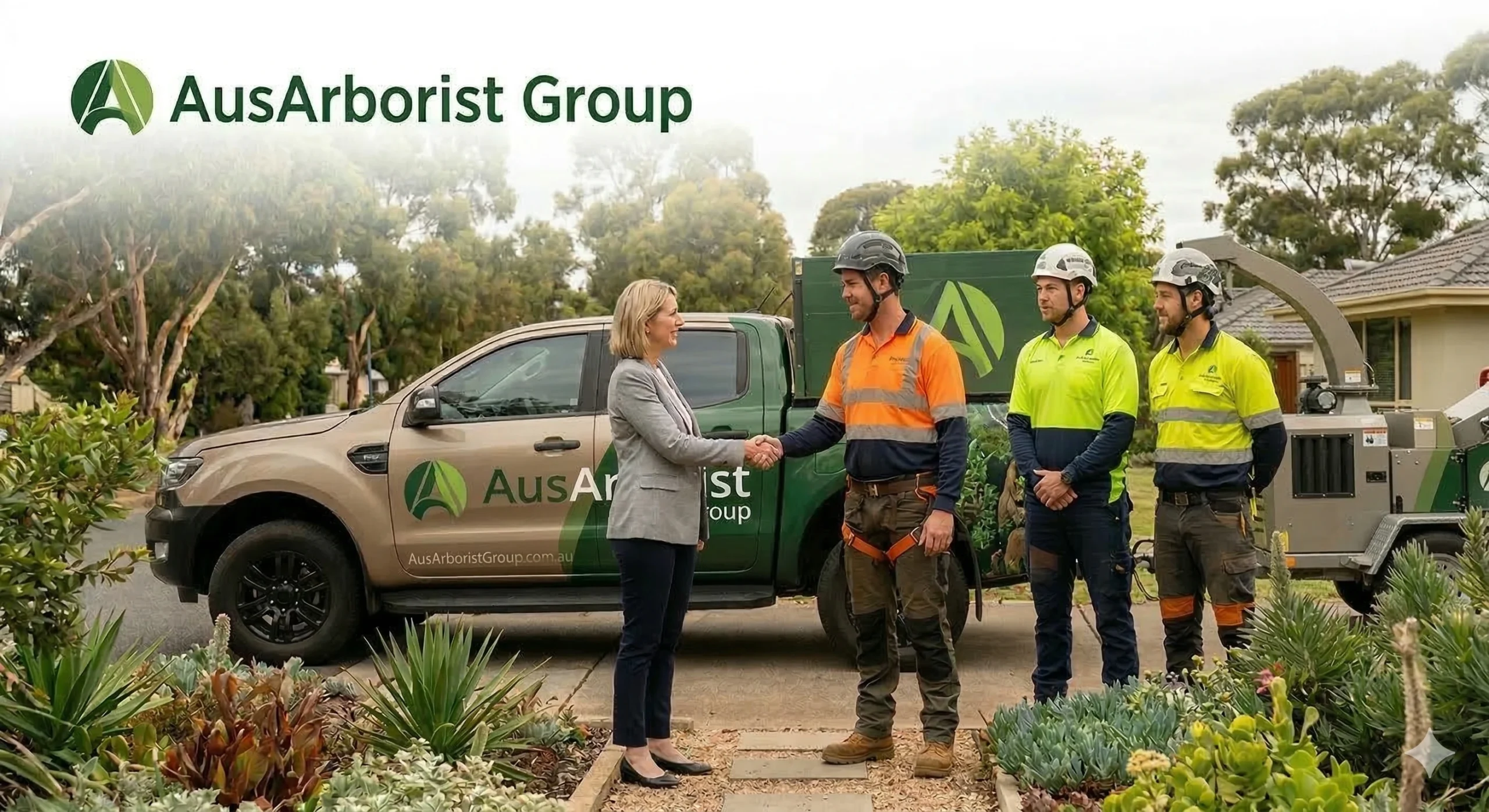
Unmanaged tree growth creates immediate safety concerns. Branches extend over structures and power infrastructure. Root systems compromise foundations and underground utilities. Council regulations require proper permits for specific tree work across Teneriffe suburbs.
AusArborist Group delivers comprehensive tree lopping solutions across Teneriffe and surrounding Brisbane regions. The team holds Australian Qualifications Framework certifications and maintains full public liability insurance. Services include emergency tree removal, systematic crown reduction, stump grinding, and ongoing arborist maintenance programs.
Understanding Tree Services: Core Differences Between Removal and Lopping
Tree services encompass distinct procedures with separate purposes and outcomes. Property owners often confuse tree lopping with complete tree removal. Each service addresses different property management needs and vegetation concerns.
Tree removal involves complete extraction of trees from properties. Arborists cut down entire tree structures including trunk systems and root networks. This service applies when trees pose immediate dangers or have died completely.
Tree lopping focuses on selective branch removal and crown management. Professionals trim specific sections while preserving overall tree health. This approach maintains tree benefits while addressing safety concerns and aesthetic requirements.
Complete Tree Removal Services
Tree removal services eliminate entire tree structures from properties. Arborists assess site conditions before implementing systematic removal procedures. The process requires specialized equipment and extensive safety protocols.
Sectional dismantling represents the primary technique for residential removal work. Teams lower individual trunk sections using rigging systems and control ropes. This method prevents damage to surrounding structures and landscape features.
- ✔️ Hazardous tree elimination near structures
- ✔️ Dead or diseased tree extraction
- ✔️ Land clearing for construction projects
- ✔️ Storm-damaged tree emergency removal
- ✔️ Root system grinding and site preparation
Professional Tree Lopping Solutions
Tree lopping maintains tree health through strategic branch removal and crown shaping. Arborists evaluate growth patterns and structural integrity before cutting operations. Proper lopping techniques promote healthy regrowth and extended tree lifespan.
Crown reduction represents the most common lopping application. Teams remove specific branch sections to reduce overall canopy size and weight distribution. This technique addresses clearance requirements while preserving tree vitality.
- ✔️ Power line clearance and utility maintenance
- ✔️ Structural pruning for safety improvements
- ✔️ Aesthetic crown shaping and balance
- ✔️ Deadwood removal and disease prevention
- ✔️ Height reduction for view restoration
Free Property Assessment – No Obligation Required
AusArborist Group provides complimentary on-site evaluations for Teneriffe properties. Certified arborists assess tree conditions, identify potential hazards, and recommend appropriate service solutions. Assessment visits include detailed cost estimates and timeline projections.
Comprehensive Tree Services Available Across Teneriffe Properties
Professional arborist teams deliver complete tree management solutions for residential and commercial clients. Services range from routine maintenance work to emergency storm response operations. Each service category addresses specific property management requirements and vegetation challenges.
Tree Removal Operations
Complete tree extraction services handle hazardous and unwanted vegetation. Teams remove trees threatening structures or blocking development projects. All removal work includes site cleanup and debris processing.
- 🔸 Large tree dismantling with crane support
- 🔸 Confined space removal techniques
- 🔸 Emergency hazard tree extraction
- 🔸 Multiple tree clearing projects
Tree Lopping & Pruning
Strategic branch removal maintains tree health and property safety. Arborists apply proper pruning techniques following Australian Standards. Services include crown reduction, deadwood removal, and structural pruning work.
- 🔸 Crown thinning and density reduction
- 🔸 Clearance pruning for buildings
- 🔸 Weight reduction for storm protection
- 🔸 Formative pruning for young trees
Stump Grinding Services
Professional stump removal eliminates remaining root systems after tree extraction. Grinding equipment processes stumps below ground level for complete site restoration. Services accommodate all stump sizes and access conditions.
- 🔸 Complete stump extraction grinding
- 🔸 Root ball removal and processing
- 🔸 Site leveling and preparation
- 🔸 Multiple stump grinding projects
Palm Tree Specialist Services
Palm tree maintenance requires specialized knowledge and techniques different from standard tree care. These species present unique structural characteristics and growth patterns. Professional teams understand palm-specific biology and maintenance requirements.
Palm removal involves systematic frond cutting and trunk sectioning procedures. Arborists work from aerial platforms or climbing systems depending on access conditions. Dead palm material creates specific fire hazards requiring prompt removal attention.
Palm Maintenance Procedures
- 🌴 Frond removal and crown cleaning operations
- 🌴 Seed pod elimination before dispersal
- 🌴 Trunk cleaning and aesthetic maintenance
- 🌴 Height reduction for tall palm species
- 🌴 Storm preparation and damage mitigation
Palm Removal Considerations
- 🌴 Complete palm tree extraction services
- 🌴 Root ball removal for replanting areas
- 🌴 Multi-trunk palm separation work
- 🌴 Hazardous leaning palm correction
- 🌴 Disease management and disposal protocols
Emergency Tree Services Response
Storm damage and structural failures create immediate tree-related emergencies. Fallen branches block access routes and damage property structures. Professional emergency response teams operate around the clock for urgent situations.
Emergency work prioritizes safety restoration and hazard elimination. Teams assess structural stability before implementing removal procedures. Temporary support systems prevent further damage during extended operations.
- 🚨 24-hour emergency response availability
- 🚨 Storm damage assessment and clearance
- 🚨 Fallen tree removal from structures
- 🚨 Hanging branch elimination services
- 🚨 Power line clearance coordination
- 🚨 Insurance documentation support services
Technical Tree Lopping Methods and Safety Protocols
Professional tree lopping requires systematic approaches balancing vegetation management with tree health preservation. Arborists apply specific techniques based on tree species, structural conditions, and site constraints. Technical expertise ensures work quality and long-term tree viability.
Crown Reduction Techniques
Crown reduction decreases overall tree canopy size through selective branch removal. Arborists identify appropriate cutting points that promote healthy regrowth patterns. This technique maintains natural tree form while achieving clearance objectives.
Proper reduction cuts occur at lateral branches capable of assuming terminal growth roles. Cut locations preserve branch collar tissue essential for wound closure processes. Incorrect cutting positions create decay entry points and structural weaknesses.
Reduction Cutting Principles
- 🔹 Lateral branch diameter minimum standards
- 🔹 Branch collar identification and preservation
- 🔹 Natural target pruning methodology
- 🔹 Weight distribution balance maintenance
- 🔹 Seasonal timing for optimal recovery
Crown Management Benefits
- 🔹 Reduced wind resistance and storm damage
- 🔹 Improved light penetration to lower vegetation
- 🔹 Clearance for structures and utilities
- 🔹 Enhanced tree structural stability
- 🔹 Extended overall tree lifespan
Deadwood Removal Operations
Dead branch removal eliminates hazardous material from tree canopies. Deceased branches lose structural integrity and fall without warning during weather events. Systematic deadwood removal programs reduce property damage risks and personal injury potential.
Arborists identify dead material through visual assessment and physical testing procedures. Dead branches exhibit bark separation, brittle wood texture, and absence of living tissue. Complete removal includes cutting back to living wood sections at appropriate collar locations.
- ✔️ Complete canopy deadwood inspection procedures
- ✔️ Hazard rating for deceased branch prioritization
- ✔️ Safe removal from elevated positions
- ✔️ Disease vector elimination through disposal
- ✔️ Preventive maintenance scheduling recommendations
Clearance Pruning for Utilities and Structures
Clearance pruning maintains safe distances between vegetation and infrastructure elements. Power line contact creates electrocution risks and fire hazards throughout Brisbane suburbs. Building clearances prevent structural damage from branch abrasion and moisture retention.
Powerline clearance work requires specific licensing and utility company coordination. Teams maintain minimum clearance distances mandated by electrical safety regulations. Regular clearance programs prevent service interruptions and reduce emergency call-outs.
⚡ Powerline Safety Requirements
Queensland electrical safety regulations mandate minimum clearance distances between vegetation and powerlines. Work near electrical infrastructure requires authorized personnel with specific high-risk work licenses. Property owners must never attempt powerline clearance without professional electrical safety certification.
Safety Protocol Implementation
Comprehensive safety systems protect workers, property occupants, and surrounding structures during tree operations. Risk assessment procedures identify potential hazards before work commencement. Control measures mitigate identified risks throughout operational phases.
Ground crews establish exclusion zones preventing unauthorized access to work areas. Aerial workers utilize redundant fall protection systems meeting Australian height safety standards. Equipment inspection protocols verify operational readiness before deployment.
🚨 Pre-Work Safety Measures
- ✔️ Comprehensive site hazard assessments
- ✔️ Safe work method statement preparation
- ✔️ Underground service location verification
- ✔️ Weather condition monitoring systems
- ✔️ Emergency response procedure briefings
- ✔️ Traffic management plan implementation
🦺 Operational Safety Controls
- ✔️ Personal protective equipment requirements
- ✔️ Fall protection system redundancy
- ✔️ Equipment inspection documentation
- ✔️ Ground crew communication protocols
- ✔️ Drop zone establishment procedures
- ✔️ First aid resource availability
Work Site Management Procedures
Effective site management minimizes disruption to property occupants and surrounding neighbors. Teams coordinate access requirements and parking arrangements before job commencement. Debris management systems maintain site cleanliness throughout work duration.
Wood chip processing occurs on-site when space permits for immediate debris volume reduction. Large material sections require cutting to transportable lengths for removal vehicles. Complete site cleanup includes ground debris collection and access area restoration.
- ✔️ Property access coordination and protection
- ✔️ Landscape feature preservation during operations
- ✔️ On-site wood chipping and debris processing
- ✔️ Material removal and disposal documentation
- ✔️ Final site inspection and cleanup verification
📋 Free Teneriffe Tree Lopping Permit Guide
Download the comprehensive guide covering Brisbane City Council permit requirements, protected tree species identification, and application procedures specific to Teneriffe properties. Includes safety checklist for property owners.
Tree Health Assessment and Ongoing Maintenance Programs
Regular tree maintenance prevents emergency situations and extends vegetation lifespan across properties. Professional assessment identifies developing problems before hazardous conditions emerge. Maintenance programs deliver cost-effective long-term tree management solutions.
Comprehensive Tree Health Evaluation
Certified arborists conduct detailed tree condition assessments examining multiple health indicators. Visual inspection techniques identify structural defects, disease symptoms, and pest infestations. Assessment reports document findings and provide management recommendations.
Structural evaluation examines trunk integrity, branch attachment strength, and root system stability. Decay detection methods reveal internal wood deterioration invisible from external observation. Load testing procedures assess mechanical strength for trees with suspected weaknesses.
Visual Health Indicators
- ✔️ Foliage density and coloration
- ✔️ Branch dieback patterns
- ✔️ Bark condition and damage
- ✔️ Fungal growth presence
- ✔️ Insect activity evidence
Structural Assessment
- ✔️ Trunk lean and stability
- ✔️ Root plate condition
- ✔️ Branch attachment integrity
- ✔️ Cavity and decay detection
- ✔️ Previous damage evaluation
Risk Evaluation
- ✔️ Target identification proximity
- ✔️ Failure probability assessment
- ✔️ Consequence severity rating
- ✔️ Mitigation priority ranking
- ✔️ Monitoring recommendation
Scheduled Maintenance Service Programs
Proactive maintenance programs prevent emergency interventions through regular service intervals. Scheduled work addresses developing issues before critical thresholds occur. Property owners reduce long-term tree care costs through preventive approaches.
Annual maintenance cycles align with tree growth patterns and seasonal considerations. Spring assessments identify winter damage requiring attention before active growth periods. Post-storm inspections detect structural compromises requiring immediate intervention.
Maintenance Program Benefits
- ✅ Reduced emergency service requirements
- ✅ Extended tree health and longevity
- ✅ Consistent annual budgeting for tree care
- ✅ Priority scheduling during busy periods
- ✅ Comprehensive property documentation records
- ✅ Early problem detection and correction
Typical Service Intervals
- 📅 Annual structural pruning sessions
- 📅 Bi-annual health monitoring inspections
- 📅 Seasonal storm preparation work
- 📅 As-needed pest and disease treatment
- 📅 Post-event damage assessments
- 📅 Growth management for restricted spaces
Disease and Pest Management
Tree diseases and pest infestations compromise structural integrity and aesthetic value. Early detection enables effective treatment before irreversible damage occurs. Some conditions require tree removal when treatment options prove ineffective.
Common Brisbane tree diseases include various fungal pathogens affecting different species. Pest problems range from sap-sucking insects to wood-boring beetles causing structural damage. Treatment approaches vary based on specific conditions and tree species affected.
⚠️ Myrtle Rust Alert for Teneriffe Properties
Myrtle rust represents a significant threat to native myrtaceae species across Brisbane suburbs including Teneriffe. This fungal disease affects eucalyptus, melaleuca, and related species. Infected trees require immediate professional assessment and may need removal to prevent disease spread to neighboring vegetation.
- ✔️ Disease identification and diagnosis services
- ✔️ Pest infestation assessment and treatment
- ✔️ Soil condition evaluation and improvement
- ✔️ Nutrient deficiency correction programs
- ✔️ Fungicide and pesticide application when appropriate
- ✔️ Infection control and quarantine recommendations
Brisbane City Council Regulations and Compliance Requirements
Tree removal and significant pruning work across Brisbane requires compliance with local government regulations. Protected tree provisions prevent removal of significant vegetation without approval. Understanding permit requirements prevents legal complications and financial penalties.
Protected Tree Categories in Teneriffe
Brisbane City Council designates certain trees as protected based on size, species, or heritage significance. Protected trees require development approval before removal or major pruning occurs. The Natural Assets Local Law establishes specific criteria for protected status.
Size-based protection applies to trees exceeding trunk diameter thresholds measured at standard height. Heritage-listed trees receive protection regardless of dimensions due to historical or cultural significance. Certain species face protection across all size categories due to ecological importance.
Protected Tree Criteria
- 🌳 Trunk diameter exceeding 60cm at 1.3m height
- 🌳 Multi-stem trees with combined diameter over 60cm
- 🌳 Heritage-registered trees of any dimensions
- 🌳 Trees within Heritage Place boundaries
- 🌳 Protected species regardless of size
Work Requiring Approval
- 📋 Complete tree removal operations
- 📋 Pruning exceeding 10% of canopy
- 📋 Root zone disturbance within drip line
- 📋 Trunk and branch cutting work
- 📋 Any work affecting tree health
Permit Application Process
Development approval applications require detailed supporting documentation. Arborist reports from qualified professionals support application assessments. Council officers evaluate applications against planning scheme provisions and vegetation protection policies.
Application processing timeframes vary depending on assessment complexity and current workload. Standard applications typically require 20 business days for determination. Complex cases involving heritage trees or significant vegetation may extend processing periods.
- ✔️ Professional arborist report preparation and submission
- ✔️ Site plan documentation showing tree locations
- ✔️ Photographic evidence of tree condition
- ✔️ Justification statement for proposed work
- ✔️ Application fee payment processing
- ✔️ Response to council information requests
Exemptions from Permit Requirements
Certain tree work categories qualify for exemptions under council regulations. Emergency situations threatening immediate safety allow work without prior approval. Dead tree removal typically proceeds without permits when arborist reports confirm tree death.
Routine maintenance pruning below specified thresholds does not trigger approval requirements. Work on non-protected trees proceeds without council involvement. Property owners maintain responsibility for verifying protected status before commencing work.
✅ Permit-Free Work Categories
Minor pruning removing less than 10% of canopy volume, dead tree removal with arborist certification, emergency work addressing immediate safety threats, and work on trees below protection size thresholds generally proceed without development approval. Professional verification of exemption status remains essential before work commencement.
Penalties for Unauthorized Work
Unauthorized removal or damage to protected trees results in significant financial penalties. Brisbane City Council actively enforces vegetation protection provisions through compliance investigations. Penalty amounts reflect tree value assessments and restoration costs.
Property owners bear responsibility for contractor compliance with regulations. Engaging qualified professionals familiar with local requirements reduces risk of inadvertent violations. Pre-work verification of permit requirements represents essential due diligence.
- ❌ Penalty notices for unauthorized tree removal
- ❌ Court prosecutions for serious breaches
- ❌ Restoration orders requiring replacement planting
- ❌ Tree value assessments for compensation calculations
- ❌ Property notation affecting future sale processes
Discuss Council Permit Requirements with Experienced Arborists
Tree Lopping Cost Factors and Pricing Considerations
Tree service pricing varies significantly based on multiple factors affecting work complexity and resource requirements. Understanding cost influences helps property owners budget appropriately for necessary work. Professional quotes account for specific site conditions and project requirements.
Primary Cost Determinants
Tree size represents the most significant pricing factor for removal and lopping services. Larger trees require more time, specialized equipment, and additional crew resources. Height and canopy spread both influence total work duration and difficulty.
Site access conditions directly impact pricing through equipment and methodology requirements. Confined spaces necessitate manual handling and specialized rigging techniques. Properties with limited access prevent machinery deployment increasing labor intensity.
Tree Characteristics
- ✔️ Overall height measurement
- ✔️ Trunk diameter dimensions
- ✔️ Canopy spread and density
- ✔️ Branch structure complexity
- ✔️ Species-specific considerations
- ✔️ Health and stability condition
Site Conditions
- ✔️ Vehicle and equipment access
- ✔️ Proximity to structures
- ✔️ Overhead power line presence
- ✔️ Ground surface conditions
- ✔️ Surrounding landscape features
- ✔️ Property boundary constraints
Service Requirements
- ✔️ Removal versus lopping scope
- ✔️ Stump grinding inclusion
- ✔️ Debris removal and disposal
- ✔️ Urgency and timing needs
- ✔️ Council permit processing
- ✔️ Additional service requests
Service Category Price Ranges
Tree removal costs typically range from moderate amounts for small trees to substantial investments for large specimen removal. Complex removals requiring crane assistance or confined space techniques command premium pricing. Emergency services outside standard business hours include additional charges.
Tree lopping and pruning services generally cost less than complete removal operations. Pricing reflects work scope, tree access difficulty, and time requirements. Regular maintenance programs often provide per-visit cost reductions compared to one-off service requests.
💰 Investment Considerations
Professional tree services represent investments in property safety, aesthetic value, and legal compliance. Quality work prevents property damage, personal injury, and future corrective costs. Lowest-price providers often compromise on insurance coverage, equipment quality, or work standards creating hidden risks for property owners.
Quote Process and Inclusions
Comprehensive quotes detail all work components and associated costs. Site inspection enables accurate assessment of requirements and potential complications. Written quotes protect both service providers and property owners through clear scope documentation.
Professional quotes itemize major cost components for transparency. Inclusions specify work scope, cleanup extent, and debris disposal arrangements. Property owners should verify insurance coverage, licensing credentials, and guarantee provisions before accepting quotes.
- 📝 Detailed work scope specification and methodology
- 📝 Itemized cost breakdown for major components
- 📝 Timeline estimates and scheduling availability
- 📝 Insurance coverage verification documentation
- 📝 Payment terms and deposit requirements
- 📝 Guarantee provisions for completed work
Cost Management Strategies
Several approaches help property owners manage tree service costs effectively. Combining multiple trees in single service visits reduces mobilization costs. Scheduling work during off-peak periods may provide pricing flexibility.
Timber retention rather than removal reduces disposal costs for properties with use for firewood. Retaining wood chips for garden mulch eliminates disposal fees. Property owners can perform minor cleanup tasks reducing total service costs.
Cost Reduction Opportunities
- 📉 Multiple tree service combinations
- 📉 Off-peak season scheduling when possible
- 📉 Timber and mulch retention options
- 📉 Maintenance programs for predictable costs
- 📉 Early problem intervention preventing emergencies
Hidden Cost Avoidance
- 🔍 Verify insurance coverage adequacy
- 🔍 Confirm permit compliance handling
- 🔍 Clarify cleanup scope and completion
- 🔍 Understand additional charge triggers
- 🔍 Document pre-existing property conditions
Selecting Professional Arborist Services in Teneriffe
Choosing qualified tree service providers protects property investments and ensures work quality. Multiple factors beyond pricing influence contractor selection decisions. Due diligence in provider evaluation prevents costly mistakes and safety incidents.
Essential Qualification Verification
Legitimate tree service providers hold current qualifications and industry certifications. Australian Qualifications Framework arboriculture certificates demonstrate formal training completion. Specific high-risk work licenses authorize particular equipment operation and elevated work activities.
Insurance verification represents critical due diligence before engaging contractors. Public liability coverage protects property owners from financial exposure during work operations. Workers compensation insurance ensures employee injury costs do not transfer to property owners.
✅ Qualified Provider Indicators
- ✔️ Current AQF arboriculture qualifications displayed
- ✔️ Valid public liability insurance certificates provided
- ✔️ Workers compensation coverage documentation
- ✔️ High-risk work licenses for equipment operation
- ✔️ Professional association memberships maintained
- ✔️ Established business with verifiable history
- ✔️ Written quotes and service agreements
- ✔️ Positive customer reviews and references
❌ Warning Signs to Avoid
- 🚩 No formal qualifications or certification proof
- 🚩 Unable to provide insurance documentation
- 🚩 Cash-only payment demands without receipts
- 🚩 Pressure tactics for immediate decisions
- 🚩 Significantly lower quotes than competitors
- 🚩 No written agreements or scope documentation
- 🚩 Limited equipment or safety gear visible
- 🚩 Negative online reviews or complaints
Reference Checking and Review Verification
Customer references provide insights into contractor reliability and work quality. Speaking directly with previous clients reveals service delivery experiences. Online reviews offer additional perspectives though require critical evaluation for authenticity.
Recent project references hold more relevance than dated testimonials. Property owners should inquire about timeline adherence, cleanup thoroughness, and communication quality. Problems resolution approaches indicate contractor professionalism when challenges arise.
- 💬 Request multiple recent customer references
- 💬 Verify online review authenticity and patterns
- 💬 Check industry association complaint records
- 💬 Confirm previous project similarity to current needs
- 💬 Inquire about problem resolution experiences
- 💬 Assess communication quality during quote process
Contract and Agreement Essentials
Written service agreements protect all parties through clear expectation documentation. Contracts specify work scope, timeline commitments, and payment arrangements. Detailed agreements reduce misunderstanding risks and provide dispute resolution frameworks.
Service contracts should itemize all included work components and exclusions. Payment schedules with milestone triggers protect against payment before work completion. Warranty provisions covering workmanship defects provide recourse for quality issues.
Essential Contract Elements
- ✔️ Detailed work scope and methodology description
- ✔️ Specific timeline with completion dates
- ✔️ Itemized pricing and payment schedule
- ✔️ Insurance coverage confirmation details
- ✔️ Cleanup and site restoration obligations
- ✔️ Warranty provisions for completed work
- ✔️ Variation and additional work procedures
- ✔️ Termination and dispute resolution processes
Red Flag Contract Issues
- ❌ Vague work scope descriptions
- ❌ Large upfront payment demands
- ❌ No warranty or guarantee provisions
- ❌ Missing insurance verification details
- ❌ Unclear change order procedures
- ❌ No completion timeline specified
- ❌ Verbal agreements without documentation
- ❌ Unwillingness to modify standard terms
Professional Service Guarantee
AusArborist Group provides comprehensive written quotes detailing all work components, timeline commitments, and pricing transparency. All team members hold current qualifications and insurance coverage. Service guarantees ensure work quality and customer satisfaction throughout Teneriffe properties.
Frequently Asked Questions: Tree Lopping in Teneriffe
What is the typical cost for tree lopping services in Teneriffe?
Tree lopping costs vary significantly based on tree size, access conditions, and work complexity. Small tree pruning typically ranges from moderate amounts, while large tree crown reduction services require substantial investment. Complex jobs involving difficult access or proximity to structures command premium pricing.
Multiple factors influence final costs including tree height, canopy density, equipment requirements, and debris disposal needs. Site-specific quotes provide accurate pricing after professional assessment. AusArborist Group offers free on-site evaluations with detailed written estimates for Teneriffe properties.
Emergency services, after-hours work, and crane-assisted operations incur additional charges beyond standard pricing. Regular maintenance programs often provide per-visit cost reductions compared to one-off service requests. Property owners should obtain multiple quotes for comparison before engaging services.
Contact 📞 (07) 5606 2148 for accurate pricing specific to your Teneriffe property requirements.
Do I need a permit to remove or lop trees on my Teneriffe property?
Brisbane City Council requires development approval for work on protected trees throughout Teneriffe. Protected status applies to trees exceeding 60cm trunk diameter measured at 1.3m height, heritage-listed trees, and certain protected species regardless of size. Work requiring approval includes complete removal, pruning exceeding 10% of canopy, and root zone disturbance.
Exemptions exist for emergency situations threatening immediate safety, dead tree removal with arborist certification, and minor maintenance pruning below specified thresholds. Property owners bear responsibility for verifying protected status before work commencement. Unauthorized work on protected trees results in significant penalties and potential prosecution.
Professional arborists assist with permit application processes including arborist report preparation, site documentation, and council liaison. Application processing typically requires 20 business days for standard cases. Complex applications involving heritage trees may extend timeframes.
AusArborist Group provides complete permit assistance for Teneriffe properties. Call 📞 (07) 5606 2148 to discuss council requirements for your specific trees.
What is the difference between tree lopping and tree pruning?
Tree lopping and pruning represent different approaches to branch removal with varying impacts on tree health. Professional pruning involves selective branch removal at appropriate locations following Australian Standards. Arborists make cuts at branch collars preserving natural defense mechanisms and promoting healthy regrowth.
Traditional lopping practices involve indiscriminate cutting creating large wounds and structural weaknesses. Poor cutting positions compromise tree defense responses increasing decay and disease susceptibility. Modern professional “lopping” services actually employ proper pruning techniques despite terminology usage.
Quality tree services focus on specific objectives including crown reduction, deadwood removal, clearance creation, and structural improvement. Work follows arboricultural best practices prioritizing long-term tree health alongside immediate management goals. Proper technique selection depends on tree species, condition assessment, and property requirements.
AusArborist Group applies industry-standard pruning techniques for all tree work. Certified arborists assess individual trees and recommend appropriate approaches. Contact 📞 (07) 5606 2148 for professional tree assessment and service recommendations.
How often should trees be professionally maintained in Teneriffe?
Maintenance frequency depends on tree species, growth rates, proximity to structures, and property requirements. Most established trees benefit from professional assessment every 2-3 years with intervention as needed. Fast-growing species or trees near buildings may require annual attention. Young trees need more frequent formative pruning during establishment phases.
Regular inspection programs identify developing problems before emergency situations arise. Annual health assessments detect disease, pest infestations, and structural defects early when treatment options remain effective. Post-storm inspections following severe weather events verify structural integrity and identify damage requiring attention.
Scheduled maintenance programs provide consistent care and cost predictability for property owners. Proactive approaches reduce emergency service needs and extend tree lifespan. Documentation of maintenance history demonstrates responsible tree management for insurance and legal purposes.
AusArborist Group designs customized maintenance programs for Teneriffe properties. Call 📞 (07) 5606 2148 to discuss appropriate service schedules for your trees.
What qualifications should professional arborists have?
Qualified arborists hold Australian Qualifications Framework certifications in arboriculture demonstrating formal training completion. AQF Level 3 represents standard industry qualification for practicing arborists. Additional certifications for chainsaw operation, elevated work platforms, and specific high-risk work activities authorize particular operations.
Professional credentials extend beyond basic qualifications to include current insurance coverage. Public liability insurance with adequate coverage limits protects property owners during work operations. Workers compensation insurance ensures employee injury costs do not transfer to clients. Valid insurance certificates should be provided upon request before work commencement.
Industry association memberships indicate professional commitment though membership alone does not guarantee competency. Continuing professional development maintains current knowledge of techniques, regulations, and safety standards. Experience with similar work projects and positive customer references provide practical capability verification.
All AusArborist Group team members hold current AQF certifications and necessary high-risk work licenses. Comprehensive insurance coverage protects Teneriffe clients during all operations. Verify credentials by calling 📞 (07) 5606 2148 before scheduling services.
Seasonal Considerations for Tree Lopping in Teneriffe
Seasonal timing influences tree work outcomes and recovery processes. Understanding optimal service periods helps property owners schedule maintenance effectively. Climate patterns specific to Brisbane affect tree growth cycles and work planning.
Optimal Pruning Seasons
Late winter through early spring represents the preferred period for most pruning work. Dormant or semi-dormant trees tolerate pruning stress better before active growth begins. Spring pruning allows rapid wound closure during the growing season following work completion.
Some species require different timing approaches based on flowering patterns and growth characteristics. Spring-flowering trees benefit from post-bloom pruning to avoid removing developing buds. Certain species prone to disease transmission require pruning during dry periods when infection risks decrease.
Spring Season Advantages
- 🌱 Rapid wound closure during growth period
- 🌱 Easy identification of dead wood
- 🌱 Reduced disease transmission risks
- 🌱 Predictable weather conditions for work
- 🌱 Strong recovery before summer stress
Summer and Autumn Considerations
- 🍂 Storm preparation pruning in late summer
- 🍂 Emergency work as needed year-round
- 🍂 Deadwood removal appropriate anytime
- 🍂 Light maintenance during growing season
- 🍂 Autumn assessment before winter storms
Storm Season Preparation
Southeast Queensland storm season spans summer months bringing severe weather risks. Proactive tree assessment and maintenance reduces storm damage potential. Identifying structural weaknesses before storm season allows preventive intervention.
Crown thinning and weight reduction decreases wind resistance during storm events. Removing deadwood eliminates projectile risks threatening property and safety. Strategic pruning maintains tree health while reducing failure potential during high winds.
- ✔️ Pre-season structural assessment and risk evaluation
- ✔️ Crown density reduction for wind load management
- ✔️ Dead branch removal eliminating projectile hazards
- ✔️ Support system installation for vulnerable trees
- ✔️ Post-storm damage assessment and correction
Emergency Response Considerations
Tree emergencies occur year-round regardless of seasonal patterns. Storm damage creates immediate hazards requiring urgent response. Structural failures from decay or disease happen unexpectedly necessitating emergency intervention.
Professional emergency services operate 24 hours addressing urgent tree situations. Priority response focuses on safety restoration and hazard elimination. Temporary support measures prevent further damage pending complete work implementation.
🚨 Emergency Situations Requiring Immediate Response
Trees or large branches fallen on structures, hanging branches threatening to fall on targets, trees blocking emergency access routes, storm-damaged trees with imminent failure risk, and trees contacting power lines all require immediate professional response. Never attempt DIY removal of emergency tree situations. Contact professional emergency services immediately for safe hazard management.
AusArborist Group provides year-round emergency tree services across Teneriffe. Urgent situations receive priority scheduling with rapid response deployment. Contact 📞 (07) 5606 2148 immediately for emergency tree service requirements.
Environmental Responsibility and Sustainable Tree Management
Professional tree services balance property management requirements with environmental stewardship responsibilities. Sustainable practices preserve urban tree canopy benefits while addressing legitimate safety concerns. Responsible arboriculture contributes to healthy urban forest ecosystems.
Urban Tree Canopy Benefits
Mature trees provide substantial environmental and economic benefits to Teneriffe properties and broader communities. Canopy cover reduces urban heat island effects through shade provision and evaporative cooling. Trees improve air quality by filtering pollutants and producing oxygen through photosynthesis.
Property values increase with mature tree presence and proper landscape maintenance. Energy costs decrease through strategic shade reducing cooling requirements. Stormwater runoff reduction occurs as trees intercept rainfall and promote soil infiltration.
Environmental Benefits
- ✔️ Carbon dioxide absorption and storage
- ✔️ Air pollutant filtration and removal
- ✔️ Oxygen production for communities
- ✔️ Urban heat reduction through shade
- ✔️ Stormwater management assistance
Economic Advantages
- ✔️ Property value enhancement
- ✔️ Energy cost reduction from shade
- ✔️ Stormwater infrastructure savings
- ✔️ Healthcare cost reductions
- ✔️ Tourism and aesthetic appeal
Social and Health Benefits
- ✔️ Mental health improvement
- ✔️ Physical activity encouragement
- ✔️ Community gathering spaces
- ✔️ Wildlife habitat provision
- ✔️ Neighborhood character creation
Sustainable Tree Work Practices
Responsible arborists prioritize tree retention when safe and practical alternatives exist. Pruning techniques follow industry standards promoting long-term tree health. Material disposal and recycling minimize environmental impacts from tree work operations.
Wood chip recycling converts removed vegetation into valuable mulch products. Larger timber sections provide firewood resources or specialty wood products. Green waste processing facilities handle material unsuitable for on-site use ensuring responsible disposal.
- ♻️ Retention prioritization when safety permits
- ♻️ Proper pruning techniques for tree health
- ♻️ On-site wood chip production for mulch
- ♻️ Timber recovery for firewood and products
- ♻️ Green waste facility processing partnerships
- ♻️ Habitat retention for urban wildlife
Replacement Planting Considerations
Tree removal creates opportunities for strategic replacement planting. Appropriate species selection ensures long-term success and minimizes future conflicts. Professional advice identifies suitable species for specific site conditions and spatial constraints.
Native species selection supports local ecosystems and wildlife populations. Climate-appropriate species tolerate Brisbane conditions with minimal irrigation requirements. Mature size consideration prevents future problems with infrastructure and structures.
Species Selection Factors
- ✔️ Mature size appropriate for location
- ✔️ Root system characteristics and spread
- ✔️ Climate adaptation and drought tolerance
- ✔️ Maintenance requirement expectations
- ✔️ Pest and disease resistance levels
- ✔️ Aesthetic characteristics and appeal
Suitable Species for Teneriffe
- 🌿 Native eucalyptus species selections
- 🌿 Melaleuca varieties for wet areas
- 🌿 Acacia species for rapid growth
- 🌿 Lophostemon confertus (brush box)
- 🌿 Waterhousea floribunda (weeping lily pilly)
- 🌿 Elaeocarpus reticulatus (blueberry ash)
AusArborist Group provides replacement planting advice for Teneriffe properties following tree removal. Species recommendations consider site conditions, aesthetic preferences, and environmental benefits. Contact 📞 (07) 5606 2148 for consultation on appropriate replacement tree selection.
Professional Tree Lopping Services for Teneriffe Properties
Quality tree lopping services protect property investments while maintaining valuable urban vegetation assets. Professional arborists deliver safe, efficient solutions for tree management challenges across Teneriffe suburbs. Comprehensive service offerings address diverse property requirements from emergency response to ongoing maintenance programs.
AusArborist Group combines formal qualifications, extensive experience, and professional equipment for superior service delivery. The team understands local council regulations and assists with compliance requirements. All work follows industry standards prioritizing safety and long-term tree health outcomes.
Property owners benefit from proactive tree management preventing emergency situations and reducing long-term costs. Professional assessment identifies developing problems before critical thresholds occur. Scheduled maintenance programs deliver consistent care and predictable budgeting for responsible property management.
Contact AusArborist Group Today
Request a free property assessment from AQF-certified arborists serving Teneriffe and surrounding Brisbane suburbs. Receive detailed written quotes with transparent pricing and comprehensive service descriptions. Experience professional tree care from Queensland’s trusted arboriculture experts.
Request Your Free Quote
Immediate Assistance Available – Call Now
Visit AusArborist Group – Servicing Teneriffe 4005
AusArborist Group provides professional tree lopping services throughout Teneriffe 4005 and surrounding Brisbane suburbs. Contact the team for prompt, professional arborist solutions.